
Why Choosing the Right Cooling Tower Fill Is Important
When selecting a cooling tower system, many people pay attention to the tower size, fan capacity, motor power, and water flow rate. However, the internal fill media is also a key component that directly affects heat transfer performance.
The main purpose of cooling tower fill is to increase the contact area between water and air. A suitable fill design helps water spread evenly, improves heat exchange, and allows the cooling tower to operate closer to its designed condition.
In real engineering projects, choosing the correct cooling tower packing is not simply about selecting the highest surface area or the largest size. Engineers usually need to consider the entire cooling system, including water quality, operating temperature, airflow design, and maintenance requirements.
A good cooling tower solution starts with understanding the working environment first and then selecting the right type of tower fill.
Factors to Consider Before Selecting Cooling Tower Fill Media
Different cooling tower applications have different operating conditions. Before choosing cooling fill, engineers normally review several important factors.
Water Quality Conditions
Water quality is one of the most important factors when selecting cooling tower fill media.
If the circulating water is relatively clean, a high surface area film fill design can often be considered because it provides efficient contact between air and water.
However, if the water contains more suspended solids, dust, biological growth, or other impurities, a more open structure may be more suitable because it reduces the risk of blockage.
This is why industrial cooling systems often require different fill solutions compared with standard HVAC cooling towers.
Operating Water Temperature
The operating temperature of the cooling water also affects material selection.
Different plastic materials have different temperature resistance characteristics. For example, polypropylene material is often considered for applications where higher temperature resistance and chemical stability are important.
PP cooling tower fill is commonly used in many industrial cooling applications where stable performance under demanding conditions is required.
Cooling Tower Type
The tower design also determines which type of fill structure is suitable.
The most common cooling tower designs include:
- Counterflow cooling towers
- Crossflow cooling towers
- Open circuit cooling towers
- Closed circuit cooling systems
Each design has different airflow and water distribution characteristics, so the selected tower fill should match the internal structure of the tower.
Different Types of Cooling Tower Fill for Various Applications
There are several common types of cooling tower fill media available in the market. The selection usually depends on the balance between heat transfer requirements and operating conditions.
Film Fill for High Efficiency Cooling Applications
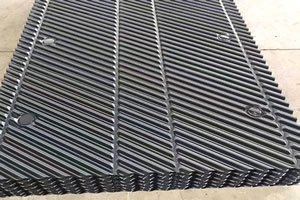
Film fill cooling tower systems use sheets with specially designed surface patterns. Water flows across the sheet surface and forms a thin water film while air passes through the channels.
This design creates a large contact area between air and water, making it widely used in many modern cooling towers.
Typical applications include:
- Commercial HVAC systems
- Industrial cooling plants
- Manufacturing facilities
- Power generation cooling systems
For crossflow cooling towers, Crossflow Film Fill is often selected when replacing old fill packs or improving cooling tower performance.
Splash Fill for Industrial Water Conditions
Splash fill uses a different working principle compared with Film Fill. Instead of creating a continuous water film, splash fill breaks falling water into smaller droplets through repeated impact.
Because of its open structure, splash fill is often considered for applications where water cleanliness may be a challenge.
Splash Grid Fill is a common splash-type fill solution used in some industrial cooling tower applications.
Typical applications include:
- Industrial plants with higher suspended solids
- Cooling towers using recycled water
- Systems requiring easier cleaning access
PVC Cooling Tower Fill for Standard Cooling Systems
PVC is one of the traditional materials used for cooling tower fill production. It is widely applied in many standard cooling systems because of its forming characteristics and practical cost considerations.
PVC cooling tower fill is commonly found in HVAC applications and general industrial cooling systems.
When selecting PVC fill, engineers usually check:
- Operating temperature range
- Water chemical conditions
- Expected maintenance schedule
- Cooling tower structure
Cooling Tower Fill Selection Guide by Industry
Different industries have different cooling requirements. Below are some common application examples.
Cooling Tower Fill for HVAC Systems
HVAC cooling towers are widely used in commercial buildings, hotels, hospitals, and large facilities.
For these systems, the main concerns are usually stable cooling performance, low maintenance requirements, and reliable long-term operation.
Film-type cooling fill is commonly used because HVAC systems usually operate with relatively controlled water conditions.
Cooling Tower Fill for Power Plants
Power generation facilities require continuous cooling because the system operates for long periods under heavy loads.
When selecting tower fill for power plant applications, engineers often focus on:
- Material durability
- Long operating cycles
- Water quality conditions
- Maintenance accessibility
Cooling Tower Fill for Chemical Industry
Chemical plants often have more complex operating conditions. Water may contain different chemical components, and material compatibility becomes an important consideration.
In these cases, PP-based cooling tower packing may be considered because polypropylene material generally provides good resistance to many chemical environments.
Cooling Tower Fill for Food Processing Plants
Food processing facilities normally require stable temperature control and reliable cooling operation.
When selecting cooling tower fill media for these applications, engineers usually consider hygiene requirements, water treatment conditions, and maintenance plans.
Common Mistakes When Choosing Tower Fill
During cooling tower replacement projects, some common mistakes may affect the final performance.
Choosing Fill Only Based on Price
The cheapest option may not always be suitable for the actual operating environment.
A fill design that does not match the water quality or tower structure may create additional maintenance problems later.
Ignoring Existing Tower Design
A cooling tower fill replacement project should consider the original tower design, including airflow direction, nozzle layout, and fill support structure.
Replacing fill without checking these details may affect water distribution and airflow balance.
Selecting the Wrong Material
Different materials have different characteristics. PVC and PP are both commonly used materials, but the final choice depends on actual operating conditions.
Temperature, chemicals, sunlight exposure, and cleaning methods should all be reviewed before making a decision.
How Engineers Approach a Cooling Tower Fill Replacement Project
From practical experience, a successful cooling tower fill replacement project usually follows several steps.
Step 1: Check Existing Fill Condition
The first step is to inspect the existing fill media. Engineers usually check whether the fill is damaged, blocked, deformed, or affected by scaling.
Step 2: Confirm Cooling Tower Parameters
Important information includes:
- Cooling tower model
- Airflow direction
- Water flow rate
- Operating temperature
- Existing fill dimensions
Step 3: Select Suitable Cooling Fill Design
After understanding the operating conditions, engineers can select suitable film fill, splash fill, PVC fill, or PP fill solutions.
Step 4: Verify Installation Requirements
Even good quality cooling tower packing needs correct installation. Proper support, water distribution, and airflow conditions are necessary for stable operation.
Final Thoughts on Choosing Cooling Tower Fill
Selecting the right cooling tower fill is a process that combines technical understanding and practical experience.
There is no universal fill media that works perfectly for every cooling system. A suitable solution depends on the cooling tower design, water conditions, temperature requirements, and industry application.
Whether the project requires Film Fill, splash fill, PVC material, or PP material, the most important point is matching the cooling tower fill media with the actual working environment.
By making the right selection at the beginning, engineers can reduce unnecessary maintenance issues and help the cooling system operate more consistently over time.
2026-3-12
2026-1-30
Cooling Tower Fill Maintenance...
2025-12-22
Comparison Guide: Counterflow ...
2025-12-10