
Cooling Tower Fill Engineering Guide for Industrial Cooling Systems
Introduction Cooling Tower Performance Problems Engineers Commonly Face
In industrial cooling systems, performance degradation rarely happens suddenly. It usually develops slowly inside the heat exchange section where water and air interaction takes place.
In many Southeast Asia petrochemical plants, Middle East power stations, and Japan coastal HVAC systems, engineers report similar symptoms: rising outlet temperature, unstable cooling performance, and higher energy consumption.
In most field inspections, the root cause is related to fouling, deformation, or improper selection of Cooling tower fill.Once the internal packing performance drops, the entire system efficiency can decrease by 10–25** without obvious external failure signals.
From engineering experience, the fill section is not just a consumable component. It directly determines heat transfer efficiency, water distribution quality, and long-term operating stability.
What Is Cooling Tower Fill Engineering Function Explanation
Cooling tower fill is the internal heat transfer medium designed to increase water-air contact surface inside a cooling tower.It is also commonly referred to as tower fill or cooling fill in industrial systems.
The core function is to slow down water velocity, spread water into thin films or droplets, and maximize evaporation efficiency.
Modern systems use structured cooling tower fill media or splash-type configurations depending on water quality and fouling risk level.
According to field engineering practice and CTI design principles, correct fill selection is one of the most important factors affecting cooling tower thermal performance.
Types of Cooling Tower Fill Used in Industrial Systems
Film Fill Cooling Tower Applications
Film fill is designed to distribute water into thin film layers across structured surfaces.This design significantly increases heat transfer efficiency.
It is widely used in HVAC systems and clean industrial water environments where fouling risk is low.
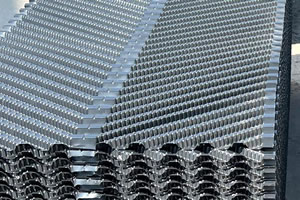
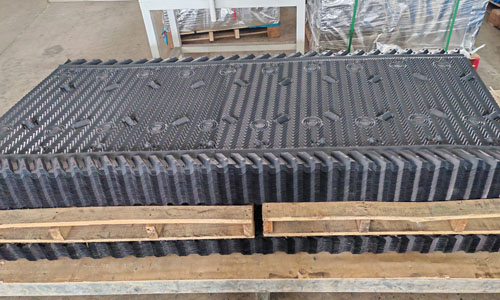
Typical configurations include corrugated fill sheets arranged to maximize surface area and airflow contact.
Splash Fill Cooling Tower Applications
Splash fill works by repeatedly breaking water droplets through impact surfaces.Compared to film-based systems, it is more resistant to clogging and scaling.
It is commonly used in steel plants, refineries, and industrial wastewater cooling systems where water quality is poor.
In high-fouling environments, splash fill cooling tower systems provide more stable long-term operation.
Corrugated Fill Structural Design
Corrugated fill improves water distribution uniformity and reduces airflow resistance.It is widely used in modern structured Cooling tower fill systems.
Compared to random packing, structured corrugated geometry provides higher efficiency and better controllability of water flow behavior.
Cooling Tower Fill Materials Engineering Selection
PVC Cooling Tower Fill
PVC cooling tower fill is widely used in industrial cooling systems due to its cost efficiency and stable thermal resistance.It is suitable for medium temperature applications below approximately 60°C–65°C.
In retrofit projects, replacing old degraded packing with PVC Cooling Tower Fill can improve system efficiency by 10–18** depending on fouling conditions.
However, PVC is sensitive to long-term UV exposure and high-temperature deformation, which must be considered during selection.
PP Cooling Tower Fill
PP cooling tower fill is used in high-temperature or chemically aggressive environments.It provides higher mechanical strength and longer service life compared to PVC.
In chemical plants and heavy industrial cooling systems, PP material is often selected for long-term stability and reduced replacement frequency.
For severe operating conditions, PP Cooling Tower Fill is generally preferred over PVC.
Performance and Efficiency Analysis of Cooling Tower Fill
The thermal efficiency of a cooling tower is directly related to the performance of its internal fill structure.
Key factors affecting Cooling tower fill efficiency include surface area, water distribution uniformity, airflow resistance, and fouling behavior.
Field measurements from industrial retrofit projects show that upgrading fill systems can improve thermal performance by 10–25**.
- Improved surface contact increases evaporation rate
- Optimized structure reduces pressure drop
- Better distribution prevents dry zones and channeling
In high ambient temperature regions such as the Middle East, optimized film fill cooling tower systems can reduce outlet water temperature by 2–4°C in real operation conditions.
How to Choose Cooling Tower Fill for Industrial Procurement
Selecting Cooling tower fill is a lifecycle engineering decision, not just a material purchase.
- Water quality: determines whether film or splash design is suitable
- Temperature conditions: affects PVC or PP material selection
- System type: crossflow or counterflow configuration impact
- Maintenance capability: defines cleaning frequency and accessibility
In real procurement decisions, engineers must balance efficiency, durability, and maintenance cost instead of focusing only on initial price.
For example, systems handling dirty water should prioritize cooling tower fill for dirty water designs even if initial cost is higher.
Common Problems in Cooling Tower Fill Operation
Clogging
Clogging is one of the most common failures in Cooling tower fill systems.It is caused by suspended solids, biological growth, and debris accumulation.
Clogging reduces airflow and increases system pressure drop, leading to higher energy consumption.
Scaling
Hard water conditions lead to mineral scaling on fill surfaces.This significantly reduces heat transfer efficiency and affects cooling tower fill performance.
Scaling is particularly severe in regions with poor water treatment systems.
Aging and Material Deformation
Long-term exposure to UV radiation and chemicals causes PVC degradation.
Aging leads to brittleness, collapse, and reduced structural stability of tower fill systems.
Maintenance Strategy for Cooling Tower Fill Systems
- Inspect Cooling tower fill condition every 6–12 months
- Use chemical cleaning for scaling control when needed
- Maintain proper water treatment to reduce biological fouling
- Replace only damaged modules when possible instead of full system replacement
Based on field data, proper maintenance can extend service life by 30–50** depending on operating conditions.
Real Engineering Experience Field Applications
Southeast Asia Industrial Cooling Plant
In a Vietnamese petrochemical plant, seawater contamination caused severe fouling.We replaced conventional packing with structured PP cooling tower fill.
Result: approximately 16–18** improvement in cooling efficiency and stable long-term operation.
High Temperature Middle East Power Station
In extreme ambient temperatures reaching nearly 50°C, standard PVC fill experienced deformation issues.
After upgrading to reinforced Cooling tower fill, system stability improved significantly and maintenance frequency was reduced.
Industrial Wastewater Cooling System Korea
High suspended solids caused frequent clogging and shutdown cycles.
A switch to splash grid fill configuration reduced fouling frequency by more than 50** and improved operational stability.
Comparison of Cooling Tower Fill Types
| Type | Thermal Efficiency | Fouling Resistance | Typical Application |
|---|---|---|---|
| Film Fill | High | Low | Clean HVAC systems |
| Corrugated Fill | Very High | Medium | Industrial cooling systems |
| Splash Fill | Medium | High | Dirty water environments |
Conclusion Engineering Decision Determines System Performance
In industrial cooling systems, Cooling tower fill is one of the most critical components affecting thermal performance and energy efficiency.
Field engineering experience shows that proper selection and maintenance can improve efficiency by 10–25** while reducing long-term operational cost.
For industrial engineers and procurement teams, the key is to match water conditions, temperature requirements, and maintenance capability with the correct fill structure and material.
A well-designed system reduces downtime, stabilizes performance, and extends equipment lifecycle significantly.
FAQ Cooling Tower Fill
What is the typical lifespan of cooling tower fill
Depending on water quality and operating conditions, the lifespan is usually 3–7 years. Severe fouling can shorten this period significantly.
What causes cooling tower fill clogging
Main causes include suspended solids, biological growth, and insufficient water treatment in industrial systems.
Which material is better PVC or PP
PVC is suitable for standard conditions, while PP is preferred for high temperature and chemically aggressive environments.
Can cooling tower fill improve system efficiency
Yes. Proper design and replacement can improve thermal efficiency by 10–25** depending on system condition.
What is the best solution for dirty water systems
Splash-based configurations are recommended for high fouling environments and unstable water quality systems.
About the Author
Senior Cooling Tower Engineer with over 10 years of industrial field experience in Southeast Asia, Middle East, Japan, and Korea.Specialized in thermal system optimization, cooling tower retrofit design, and failure analysis of fill media systems.Regularly works with engineering standards such as ASHRAE and Cooling Technology Institute (CTI).
2026-4-12
2025-12-17
Crossflow Film Fill, Cooling T...
2025-12-9
Guide to Cooling Tower Fill Sp...
2025-11-29