
Introduction Cooling Capacity Problems Often Begin With Wrong Fill Selection
In many industrial facilities, cooling problems appear gradually rather than suddenly.Operators may notice unstable outlet temperature, longer operating cycles, or increased energy consumption before discovering the actual reason behind the performance decline.
Through years of field inspections, engineers have found that unsuitable internal packing is one of the major causes affecting cooling tower operation.The selection and condition of Cooling tower fill directly influence water distribution, airflow movement, and heat transfer efficiency.
A cooling tower can have a properly working fan, pump, and water circulation system, but poor fill performance can still reduce the overall cooling effect.
For industrial users, choosing the right fill structure at the beginning of a project can reduce future maintenance requirements and improve long-term operating stability.
What Is Cooling Tower Fill Role in Heat Exchange Process
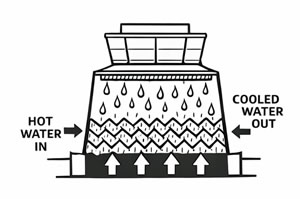
Cooling tower fill is the internal heat transfer medium installed inside a cooling tower to increase contact between water and air.
Its main function is to slow down water flow, enlarge the effective contact area, and create better evaporation conditions.
Without suitable fill media, water will quickly move through the tower with limited interaction with air, reducing cooling efficiency.
Modern industrial systems use different types of cooling tower fill media based on water quality, temperature requirements, and operating environment.
Engineers normally evaluate fill performance according to heat transfer ability, pressure loss, fouling resistance, and expected service life.
Types of Cooling Tower Fill Selected for Different Applications
Film Fill Designed for Maximum Heat Transfer
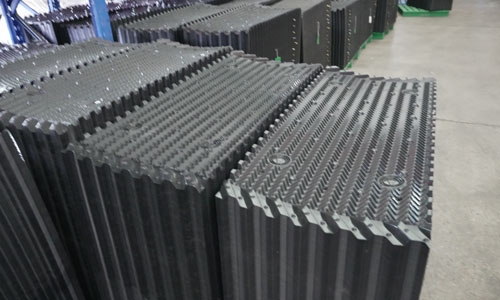
Film fill is commonly selected when high thermal efficiency is the main target.Its surface design allows water to spread evenly into thin layers, creating a large heat exchange area.
The film fill cooling tower structure is widely used in HVAC systems, power facilities, and industrial applications with controlled water conditions.
Many modern film products use corrugated fill surfaces to improve turbulence and maintain better contact between water and air.
Splash Fill Designed for Challenging Water Conditions
Splash fill uses repeated impact points to separate water into droplets.Unlike fine surface structures, it does not rely heavily on narrow passages for heat transfer.
This makes splash fill cooling tower systems suitable for applications where water contains suspended particles or contaminants.
Industries dealing with wastewater, recycling water, and heavy processing often select splash designs because reliability is more important than maximum efficiency.
Corrugated Fill Designed for Balanced Operation
Corrugated fill provides a balance between heat transfer performance and operational durability.
Its structured channels improve water movement and help maintain more consistent airflow distribution.
For many industrial projects, corrugated designs are selected because they provide stable performance under changing operating conditions.
Cooling Tower Fill Materials Affecting Service Life
PVC Cooling Tower Fill Used in Standard Applications
PVC cooling tower fill is one of the most common materials used in industrial cooling systems because of its cost efficiency and reliable performance.
It provides good corrosion resistance and is suitable for many general cooling applications.
During renovation projects, replacing old packing with PVC Cooling Tower Fill can restore lost heat transfer capability.
However, engineers should carefully evaluate operating temperature because long-term exposure to extreme heat may affect material stability.
PP Cooling Tower Fill Used for Higher Demand Conditions
PP cooling tower fill is selected when higher temperature resistance and stronger chemical stability are required.
Compared with conventional materials, PP provides better resistance against deformation caused by continuous thermal stress.
For chemical industries and difficult operating environments, PP is often considered a suitable choice for long-term Cooling tower fill replacement.
Performance and Efficiency Factors Engineers Must Evaluate
The performance of a cooling tower depends on how effectively the fill controls the movement of water and air.
Several engineering factors determine final cooling results:
- Effective wet surface area
- Water distribution uniformity
- Airflow resistance level
- Resistance against contamination buildup
A suitable Cooling tower fill design can significantly improve heat exchange efficiency because it allows more complete interaction between air and water.
In practical replacement projects, improving cooling tower fill efficiency has helped industrial users recover approximately 15–25** of lost cooling performance.
How to Choose Cooling Tower Fill Based on Engineering Conditions
Selecting the correct Cooling tower fill requires analyzing actual operating conditions rather than simply choosing the highest efficiency product.
- Water quality: determines contamination resistance requirements
- Operating temperature: affects material selection
- Cooling load: influences fill structure requirements
- Maintenance ability: affects replacement planning
A common mistake in procurement is selecting high efficiency fill for water conditions that are unsuitable.This often leads to frequent cleaning and early replacement.
For systems with poor water quality, cooling tower fill for dirty water should prioritize durability and stable operation.
Common Problems Found During Cooling Tower Fill Operation
Clogging Reduces Air Water Contact Area
A cooling tower fill clogged condition is usually caused by sediment, biological growth, dust, or insufficient water treatment.
Once passages become blocked, airflow resistance increases and cooling performance declines.
Scaling Creates Insulating Layers
Scaling occurs when minerals in circulating water deposit on the fill surface.
These deposits reduce effective heat transfer area and make the cooling process less efficient.
Aging Changes Fill Structure Performance
After years of operation, exposure to heat, chemicals, and sunlight can weaken plastic materials.
Aged fill may lose its original shape, reducing airflow and water distribution performance.
Maintenance Tips Extend Cooling Tower Fill Operating Life
- Inspect fill condition during scheduled shutdown periods
- Monitor water quality continuously
- Control biological growth through proper treatment
- Replace damaged modules before major efficiency loss occurs
Proper cooling tower fill maintenance reduces unexpected downtime and helps maintain stable cooling performance.
Many industrial users achieve longer service life by combining regular inspection with effective water management.
Real Engineering Experience Industrial Project Analysis
Southeast Asia Food Processing Cooling Project
A food processing facility in Thailand experienced unstable cooling during high production periods.Inspection found that the original fill had accumulated biological deposits and reduced water distribution efficiency.
After replacing the damaged sections with improved fill media, cooling stability increased by approximately 18** and cleaning frequency was reduced.
Middle East Chemical Plant High Temperature Project
A chemical plant operating under extreme summer temperatures experienced repeated cooling fluctuations.
The previous material showed deformation after continuous high temperature exposure.After changing to a more suitable material solution, the cooling system maintained better performance during peak demand periods.
Industrial Wastewater Cooling Project
A wastewater treatment facility faced frequent blockage because of high suspended solids in circulating water.
After selecting a more suitable structure for contaminated water conditions, the plant reduced maintenance interruptions and improved operation reliability.
Comparison Table Cooling Tower Fill Performance Analysis
| Fill Type | Main Feature | Best Application | Maintenance Level |
|---|---|---|---|
| Film Fill | High heat transfer efficiency | Clean water systems | Regular inspection required |
| Splash Fill | Strong contamination resistance | Dirty water applications | Lower cleaning frequency |
| Corrugated Fill | Balanced thermal performance | General industrial cooling | Medium maintenance |
| PP Fill | High temperature resistance | Chemical industrial systems | Long service stability |
Conclusion Better Fill Selection Creates More Reliable Cooling Systems
The internal fill system is one of the most important factors affecting cooling tower performance.
Choosing suitable Cooling tower fill according to water quality, temperature conditions, and operating requirements helps improve efficiency and reduce future maintenance costs.
For industrial customers in Southeast Asia, Middle East, Japan, and Korea, engineering evaluation before purchase can prevent many common operational problems.
A properly selected fill solution provides stable heat transfer performance and supports continuous industrial operation.
FAQ Cooling Tower Fill Selection Questions
How do I select the correct cooling tower fill
Selection should consider water quality, operating temperature, cooling load, and maintenance requirements.
What causes cooling tower fill efficiency loss
Common causes include clogging, scaling, aging, and unsuitable design selection.
Is PP cooling tower fill suitable for high temperature systems
Yes. PP is commonly selected for applications requiring better temperature resistance.
Can cooling tower fill replacement improve performance
Yes. Replacing damaged or unsuitable fill can recover cooling efficiency and improve system stability.
Which fill type is suitable for dirty water
Splash fill is generally preferred because of its stronger resistance against contamination.
About the Author
Senior Cooling Tower Engineer with over 10 years of experience in cooling tower design, fill selection, maintenance optimization, and industrial troubleshooting.Experienced in providing practical cooling solutions for customers across Southeast Asia, Middle East, Japan, and Korea.
2026-3-6
2025-12-13