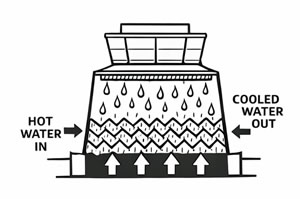
In the competitive industrial landscape of Southeast Asia and East Asia, energy efficiency is paramount. A cooling tower is only as efficient as its internal components. To achieve the lowest possible cold water temperature, three specific components must work in perfect harmony: the Cooling tower fill, the drift eliminators, and the air inlet louvers.
1. The Core: Optimizing Counterflow Film Fill Selection
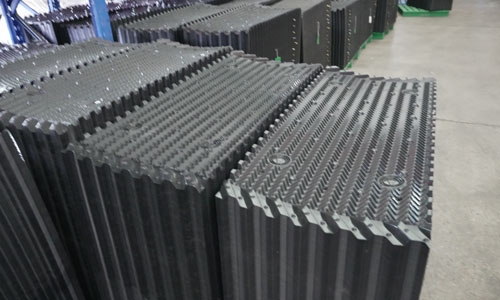
The heat transfer process primarily happens within the fill media. For clean water applications, Counterflow Film Fill is the gold standard.
The key metric here is the "Specific Surface Area." Our high-performance PVC cooling tower fill features a cross-fluted design (typically 12mm to 19mm flute size) that spreads water into a microscopic film. This maximizes the air-water contact time.
Key Tip: While tighter flutes (12mm) offer better cooling, they are prone to fouling. For areas with moderate water quality, we recommend a 19mm flute size to balance thermal performance with maintenance longevity.
2. The Airflow Management: Louvers and Eliminators
Efficiency isn't just about water; it's about air.
- Cooling Tower Air Inlet Louvers: These control the air intake. Old, broken louvers create turbulent airflow, which reduces the fan's effectiveness. Installing modern cellular louvers streamlines the air entry, reducing fan energy consumption while blocking sunlight to prevent algae growth.
- Drift Eliminators: High-velocity air pulls water droplets out of the tower. High-efficiency cellular Drift Eliminators create a tortuous path for the air, capturing 99.99** of droplets. This keeps the water inside the system where it belongs, maintaining the correct water-to-air ratio needed for optimal cooling.
3. Material Considerations: Why Virgin PVC Matters
The structural integrity of your Counterflow Film Fill directly impacts efficiency. Recycled PVC sheets often deform under the weight of water and scale, closing off air channels. We utilize only Virgin PVC material which ensures the flute geometry remains stable for years, maintaining the design thermal capacity.
Don't settle for substandard cooling. Contact our engineering team to calculate the potential efficiency gains of upgrading your tower internals.