
Introduction Material Choice Directly Influences Cooling Stability
In industrial cooling systems, long-term reliability depends not only on equipment design but also on the durability of internal components.
Among these components, Cooling tower fill plays a key role in maintaining consistent heat exchange performance.
Different materials respond differently to temperature, water quality, and chemical exposure.If the material cannot withstand actual operating conditions, performance degradation will occur over time.
Understanding how material selection affects system reliability helps engineers avoid repeated maintenance and unexpected downtime.
What Is Cooling Tower Fill and Why Material Matters
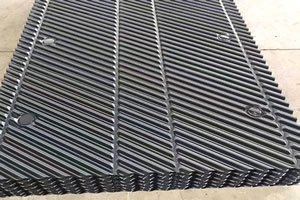
Cooling tower fill is designed to increase the contact surface between circulating water and air.
As warm water flows through the fill, it spreads across the surface while air passes through the structure.This interaction allows heat to dissipate through evaporation.
The performance of cooling tower fill media depends not only on structure but also on material strength and resistance to environmental factors.
A suitable material ensures that the fill maintains its shape and function throughout the entire service life.
Common Cooling Tower Fill Materials Used in Industry
PVC Cooling Tower Fill for Standard Applications
PVC cooling tower fill is widely used in general industrial cooling systems.
It offers stable performance under moderate temperatures and controlled water conditions.
PVC material provides a balance between cost and performance, making it suitable for many HVAC and industrial cooling applications.
However, its temperature resistance is limited, and prolonged exposure to high heat may lead to deformation.
PP Cooling Tower Fill for High Temperature Environments
PP cooling tower fill is selected for applications requiring higher temperature resistance and stronger durability.
It maintains structural stability under demanding operating conditions and resists chemical exposure more effectively.
This makes it suitable for chemical plants, power generation facilities, and continuous industrial processes.
In many cases, PP is chosen during Cooling tower fill replacement to improve long-term reliability.
How Material Affects Cooling Tower Reliability
The material of the fill influences several key performance factors:
- Resistance to temperature changes
- Durability under continuous operation
- Ability to resist chemical corrosion
- Structural stability over time
- Maintenance frequency
A properly selected cooling tower fill design combined with suitable material ensures that the system operates consistently without frequent performance loss.
In contrast, unsuitable material may lead to deformation, cracking, or early aging.
Material Related Problems in Cooling Tower Fill
Deformation Under High Temperature
When operating temperatures exceed material limits, the fill structure may begin to deform.
This changes airflow channels and reduces effective heat transfer area.
In such cases, upgrading material selection becomes necessary.
Chemical Damage in Industrial Systems
Exposure to industrial chemicals can gradually weaken the fill material.
This leads to brittleness and structural failure over time.
Material compatibility should always be considered during selection.
Aging Caused by Long Term Operation
Continuous exposure to heat, sunlight, and water flow affects material properties.
Aged fill may lose flexibility and strength, reducing cooling tower fill efficiency.
Choosing the Right Material for Different Applications
Material selection should be based on actual working conditions rather than standard specifications.
- Normal temperature systems: PVC is usually sufficient
- High temperature systems: PP is more reliable
- Chemical exposure environments: select corrosion-resistant material
- Continuous operation plants: prioritize durability
For systems with difficult water conditions, selecting cooling tower fill for dirty water along with proper material improves operational stability.
The goal is to match material properties with real environmental demands.
Maintenance Considerations Based on Material Type
Different materials require different maintenance approaches.
- PVC requires monitoring for deformation under heat
- PP requires inspection for long-term structural stability
- All materials need regular cleaning to prevent blockage
Proper cooling tower fill maintenance extends service life and maintains cooling efficiency.
Real Engineering Experience Material Selection Cases
Southeast Asia Industrial Plant
A factory operating under moderate conditions used PVC fill for several years.
As production increased, operating temperatures rose, causing partial deformation.After upgrading to a more suitable material, cooling stability improved.
Middle East High Temperature Application
A facility experienced performance decline during peak summer periods.
The original material could not maintain structure under high heat.After switching to PP fill, system reliability improved significantly.
Chemical Processing Facility
A plant exposed to chemical vapors experienced early material degradation.
Selecting a more resistant material reduced replacement frequency and maintenance costs.
Comparison Table PVC vs PP Cooling Tower Fill
| Property | PVC Fill | PP Fill |
|---|---|---|
| Temperature Resistance | Moderate | High |
| Chemical Resistance | Standard | Better |
| Cost | Lower | Higher |
| Best Application | General industrial cooling | High temperature systems |
Conclusion Material Selection Determines Long Term Cooling Reliability
The durability and performance of a cooling tower depend heavily on selecting the right material for internal components.
Choosing appropriate Cooling tower fill material ensures stable operation, reduces maintenance requirements, and improves overall system reliability.
For industrial users across Southeast Asia, Middle East, Japan, and Korea, understanding material behavior under real conditions is essential for long-term success.
A well-matched material solution supports efficient cooling and consistent production performance.
FAQ Cooling Tower Fill Material Questions
Which material is better for high temperature cooling towers
PP is generally more suitable due to its higher temperature resistance.
Is PVC cooling tower fill widely used
Yes. It is commonly used in standard industrial and HVAC systems.
Can material affect cooling efficiency
Yes. Material stability directly influences heat transfer performance.
How to choose between PVC and PP
Selection depends on temperature, chemical exposure, and operating conditions.
Does material impact maintenance frequency
Yes. More durable materials typically require less frequent replacement and maintenance.
About the Author
Senior Cooling Tower Engineer with over 10 years of experience in industrial cooling systems, specializing in material selection, system optimization, and long-term performance improvement.
2026-3-12
2026-1-30
Cooling Tower Fill Maintenance...
2025-12-22
Comparison Guide: Counterflow ...
2025-12-10