
Why Cooling Tower Fill Fails Early in Tropical Climates
Typical Working Conditions in Southeast Asia
In Southeast Asia, cooling towers operate under long hours, high ambient temperature, strong UV exposure, and often unstable water quality. From our site experience, many Cooling Tower Fill problems are not caused by poor manufacturing, but by mismatch between material selection and real operating conditions.
Three Real Reasons Cooling Tower Fill Fails Early
Heat Deformation Under Continuous High Temperature
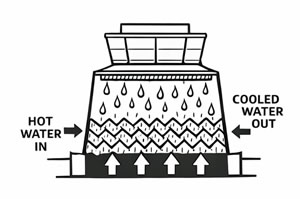
Many Film Fill Cooling Tower projects still use standard PVC fill. In tropical regions, basin water temperature can easily stay above 40°C for long periods. PVC softens earlier than many buyers expect, leading to deformation, reduced airflow, and channel collapse.
Scaling and Biological Fouling
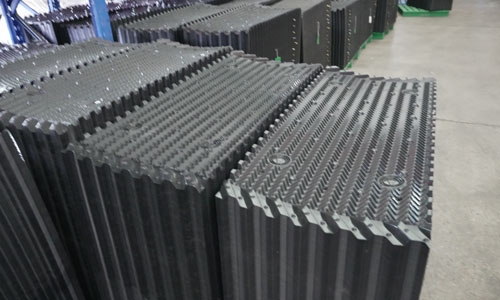
Water quality is often overlooked during the fill selection stage. High hardness, suspended solids, and algae growth can quickly block Corrugated Fill channels, reducing effective heat transfer area.
Uneven Airflow Distribution
Improper matching between Cooling Tower Media and air inlet design causes dead zones. These areas trap dirt and accelerate localized failure.
Material Selection Tips from Site Engineers
For high-temperature or unstable water quality environments, PP Cooling Tower Fill offers better long-term dimensional stability. PVC cooling tower fill is still suitable for many projects, but only when operating conditions are properly controlled.
Which Fill Type Works Better in Hot & Humid Areas
Film Fill provides higher thermal efficiency, but Splash Grid Fill performs better in dirty water conditions with lower maintenance requirements.
Maintenance Mistakes We See Too Often
Delayed cleaning, uneven water distribution, and ignoring drift control all shorten Cooling Fill lifespan significantly.
Summary: Practical Advice
Cooling Tower Fill selection should start from real site conditions, not catalogue data. In tropical climates, material choice and airflow design matter more than theoretical efficiency.
Need help selecting the right Cooling Tower Fill?
If you have drawings, operating data, or special requirements, feel free to share them with us. Our engineers are happy to review your project and give practical advice.
2026-3-6
2025-12-13