
What Is Fill in a Cooling Tower?
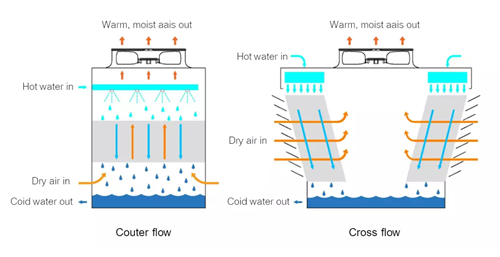
If you have ever worked with industrial cooling systems, you probably know that the real “heart” of a cooling tower is not the fan or the pump — it is the Cooling Tower Fill. In simple terms, cooling tower fill (also called Cooling Tower Media or Tower Fill) is the internal material that increases the contact area between hot water and air, allowing heat to be transferred efficiently.
From my experience working with cooling towers across Southeast Asia — from power plants to factories and HVAC systems — choosing the right fill can easily improve cooling efficiency by 20–40**, or completely ruin a tower if selected incorrectly.
Basic Function of Cooling Tower Fill
The main job of cooling fill is to slow down the water flow and spread it into thin films or droplets. When water flows over the fill surface, air passes through at the same time. The larger the contact area and the longer the contact time, the better the heat exchange.
- Increase heat transfer area
- Improve evaporation efficiency
- Reduce water consumption
- Lower operating costs
Common Terms You May Hear
In real projects, different people may use different names for the same thing:
- Cooling Tower Fill
- Cooling Fill
- Cooling Tower Media
- Film Fill
- Corrugated Fill
They all refer to materials installed inside the cooling tower to maximize cooling performance.
Types of Cooling Tower Fill by Working Principle
Film Fill Cooling Tower
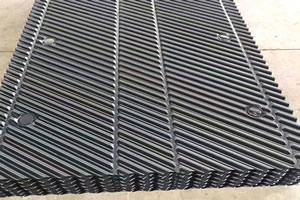
Film Fill is the most widely used solution today, especially for industrial and HVAC cooling towers. Water flows in a thin film over corrugated PVC or PP sheets, creating a very large heat transfer surface.
Typical examples include:
Film fill cooling towers are popular in Southeast Asia because they provide high efficiency even in hot and humid climates.
Advantages of Film Fill
- High thermal efficiency
- Compact structure
- Lower fan power consumption
Things to Watch Out For
- Sensitive to dirty water
- Requires proper water treatment
Splash Grid Fill
Unlike film fill, Splash Grid Fill breaks water into droplets instead of spreading it into films. This type is usually made from PP material and works well with poor water quality.
Typical product:
In factories where water contains scale, oil, or suspended solids, splash fill is often the safer choice.
Cooling Tower Fill by Material
PVC Cooling Tower Fill
PVC cooling tower fill is the most common choice for standard industrial cooling towers. It offers excellent heat transfer performance and good resistance to temperature and chemicals.
PP Cooling Tower Fill
For higher temperature applications or aggressive water conditions, PP Cooling Tower Fill is often recommended.
PP material is stronger, more durable, and less brittle than PVC, making it suitable for heavy-duty cooling towers.
Fill Structure, Size, and Customization
Cooling tower fill is not “one size fits all”. Sheet spacing, flute angle, block height, and overall dimensions all affect performance.
Standard Size vs Custom Design
- Standard fill blocks: faster delivery, lower cost
- Custom fill size: perfect fit for old or special towers
For retrofit projects in Southeast Asia, custom-sized fill often saves installation time and avoids airflow bypass issues.
Related Cooling Tower Components
To achieve the best performance, cooling tower fill must work together with other components:
Daily Maintenance Tips from the Field
- Check scaling and fouling regularly
- Maintain proper water treatment
- Inspect fill blocks during annual shutdowns
In tropical climates, neglecting maintenance can reduce fill efficiency much faster than expected.
Summary
Cooling tower fill plays a critical role in cooling performance, energy efficiency, and operating cost. Understanding fill types, materials, and structure helps you make the right choice for your cooling tower system.
Need Help Choosing the Right Cooling Tower Fill?
If you are not sure which fill type is suitable for your project, feel free to send us your drawings, photos, or operating conditions. Our engineering team is happy to help.
Contact Us for Professional Support
2026-3-6
2025-12-13