
Optimizing Cooling Tower Performance: The Critical Role of Drift Eliminators and Inlet Louvers
For cooling tower maintenance contractors and facility managers, the focus is often solely on the fill media. However, the efficiency of a cooling tower relies heavily on its air management accessories. Poorly functioning drift eliminators or broken inlet louvers can lead to massive water waste, biological hazards (like Legionella), and reduced thermal performance. This guide covers everything you need to know about upgrading these essential components.
1. Drift Eliminators: Stopping Water Loss and Protecting Health
Drift loss occurs when droplets of circulating water are entrained in the air stream and discharged into the atmosphere. This is not just water waste; it is a chemical loss and a potential health risk.
Types of Drift Eliminators We Offer
Choosing the right eliminator depends on the tower design and acceptable pressure drop levels:
- Cellular (Honeycomb) Type: These are highly efficient, causing the air to change direction multiple times. They are perfect for modern counterflow towers. Our Drift Eliminators in cellular design can reduce drift loss to as low as 0.002**.
- Blade Type: Often used in crossflow towers or industrial applications with dirtier water, offering lower air resistance.
Signs You Need to Replace Drift Eliminators
Inspect your existing eliminators for the following:
- Brittleness and Cracks: UV exposure can damage low-quality PVC over time.
- Gaps between Modules: Air will take the path of least resistance. If there are gaps, drift-laden air will bypass the eliminator entirely.
- Heavy Scaling: Scale buildup changes the aerodynamics, increasing fan power consumption.
2. Air Inlet Louvers: The First Line of Defense
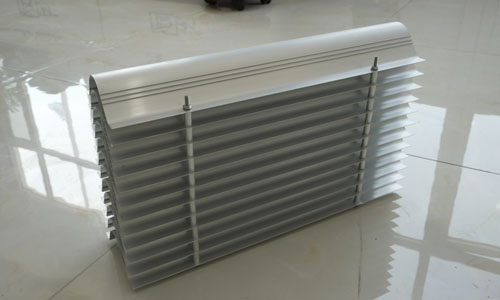
The air inlet is where the cooling process begins, but it is also where problems can enter. High-quality Cooling Tower Air Inlet Louvers perform three critical functions:
- Sunlight Blocking: By keeping sunlight out of the basin, they inhibit algae growth, reducing the need for expensive biocides.
- Debris Filtration: They prevent leaves, birds, and trash from entering the tower, which protects the Counterflow Film Fill from clogging.
- Splash-out Prevention: They keep the water inside the tower, preventing slip hazards on the surrounding deck.
Need Custom Dimensions? We Manufacture to Order.
Whether you need specific cellular block sizes for a retrofit or blade-style louvers for a custom build, we can help. Send us the dimensions of the air intake or discharge area.
3. Material Selection and Durability
Not all plastics are created equal. Our accessories are manufactured from rigid, UV-stabilized PVC. For extreme industrial environments, we can also discuss PP options.
When selecting parts, it is crucial to ensure compatibility. For example, if you are upgrading a crossflow tower, the Crossflow Film Fill often has louvers integrated. However, for older Marley or BAC towers, standalone retrofit louvers might be required.
4. Installation and Maintenance Tips
- Tight Fitment: When installing drift eliminators, ensure a tight fit against the tower walls. Use foam sealers if necessary to prevent bypass.
- Regular Cleaning: Both louvers and eliminators should be gently cleaned with a water jet during annual shutdowns to remove dust and scale.
- Check Supports: Ensure the support beams are not corroded; sagging supports can cause gaps in the eliminator layer.
5. Why Choose Our Accessories?
We supply wholesalers across Southeast Asia and the Middle East with "container-ready" packaging. Our products are designed to nest efficiently to save on shipping costs. Whether you need a small batch for a repair job or a full container for stock, we are your reliable partner.
2026-3-12
2026-1-30
Cooling Tower Fill Maintenance...
2025-12-22
Comparison Guide: Counterflow ...
2025-12-10