
Introduction: Choosing Cooling Tower Fill Is Rarely as Simple as It Looks
Cooling tower fill is often described as the “heart” of a cooling tower, and technically that is true.However, in real industrial projects across Southeast Asia, we have seen many cases where the wrongCooling tower Fill caused performance issues long before fans or pumps showed any problems.
On paper, most Cooling Tower Media looks similar.In operation, the difference can be significant.
What Cooling Tower Fill Actually Does in Daily Operation
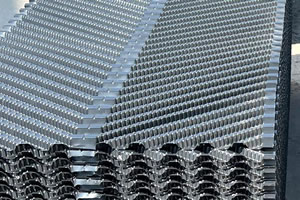
A cooling tower fill increases contact time between water and air.Most modern systems use Film Fill cooling tower designs withCorrugated Fill surfaces to form thin water films.
That said, high efficiency on datasheets does not always translate into stable performance,especially in high-humidity environments like Southeast Asia.
Cooling Tower Fill Selection Based on Tower Type
Counterflow Cooling Towers – Compact but Sensitive
Counterflow towers rely on vertical airflow, which makes fill selection more sensitive than many people expect.In most cases,Counterflow Film Fillworks very well.
However, when water quality fluctuates or biological growth is not well controlled,we usually see clogging start from the lower section first.This is something designers often overlook.
Crossflow Cooling Towers – More Forgiving, Not Always More Efficient
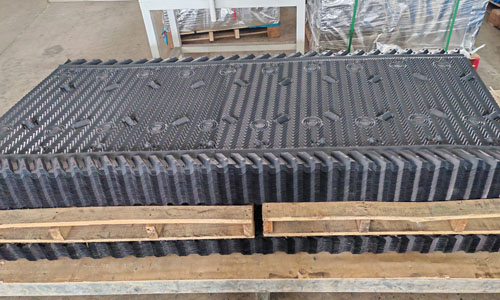
Crossflow Film Fillis commonly used in crossflow towers because of its low air resistance.From our site experience, this design tolerates uneven water distribution better.
That said, it is not automatically more efficient.Poor basin maintenance can quickly reduce actual cooling performance.
Cooling Fill Materials: PVC vs PP in Real Conditions
Material choice is often driven by cost, but operating conditions should come first.
PVC cooling tower fillis widely used and performs reliably below 55°C.In most HVAC and light industrial applications, PVC is still our default recommendation.
PP Cooling Tower Fillbecomes a better option when temperature stays high or chemical exposure is unavoidable.We usually suggest PP for petrochemical or process cooling systems.
Fill Structure, Corrugation, and Cooling Efficiency
Corrugated design helps stabilize water films, but more surface area is not always better.We have seen cases where overly dense Corrugated Fillrestricted airflow and actually reduced cooling capacity.
In practice, balanced design almost always outperforms aggressive designs.
Standard Size vs Custom Cooling Tower Fill
Many older cooling towers in Southeast Asia were not built to today’s standard dimensions.Custom cutting is often necessary, and when done correctly,it does not reduce performance.
What causes problems is poor installation that leaves air bypass gaps.
Daily Maintenance – What Usually Gets Ignored
Even the best Cooling Fill will fail without maintenance.Biological fouling is the most common issue we see on site.
Airflow management usingCooling Tower Air Inlet Louversand drift control withDrift Eliminatorshelps protect the fill and stabilize operation.
Conclusion: Focus on Stability, Not Just Efficiency
Selecting cooling tower fill is not about choosing the highest efficiency number.In real operation, stable performance and tolerance to local conditions matter more.
Need a Second Opinion on Your Cooling Tower Fill?
If you are unsure which fill type fits your project, you can send us your drawings, photos, or operating data. We review real conditions first, not just specifications.
2026-4-12
2025-12-17
Crossflow Film Fill, Cooling T...
2025-12-9
Guide to Cooling Tower Fill Sp...
2025-11-29