

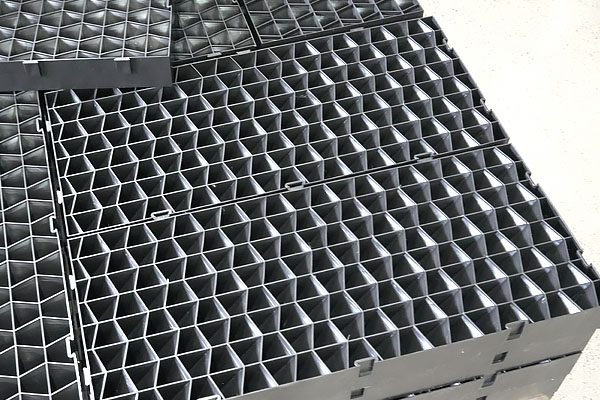
Cooling Tower Air Inlet Louvers
Practical Airflow Control Components for Cooling Towers
What Air Inlet Louvers Actually Do in a Cooling Tower
In a cooling tower, air inlet louvers look simple, but they do a lot more than most people think. From an engineer’s point of view, louvers are not just panels at the air inlet — they directly affect airflow stability, water loss, and how clean the inside of the tower stays over time.
The main job of cooling tower air inlet louvers is to let fresh air enter the tower smoothly while keeping unwanted things out. This includes splash-out water, sunlight, debris, and in some cases strong crosswinds. When louvers are designed properly, air enters evenly across the inlet area, which helps the fill and fan work the way they are supposed to.
On sites where louvers are poorly designed or missing, you usually see the same problems: uneven airflow, water blowing out of the tower, higher makeup water consumption, and more dirt getting inside the system. Over time, these issues increase maintenance work and reduce cooling efficiency.
How Air Inlet Louvers Work in Real Operating Conditions
In daily operation, air inlet louvers guide incoming air into the cooling tower at the right angle and speed. Instead of allowing air to rush in randomly, louvers straighten and distribute airflow so it moves evenly through the fill media.
At the same time, louvers block direct sunlight from entering the tower. This may sound minor, but in real projects it makes a difference. Less sunlight means less algae growth inside the cold water basin and on the fill. That alone can reduce cleaning frequency and chemical usage.
Another practical function is water splash control. When hot water falls through the fill, some droplets naturally move toward the air inlet. Well-designed louvers catch and redirect these droplets back into the tower, reducing visible water loss and helping the site meet environmental and housekeeping requirements.
Materials Used for Cooling Tower Air Inlet Louvers
Most cooling tower air inlet louvers are made from PVC, PP, FRP, or aluminum, and the choice depends on the operating environment and budget.
PVC louvers are common in standard cooling towers. They are lightweight, corrosion-resistant, and cost-effective for most industrial and HVAC applications.
PP louvers are used where higher temperatures or more aggressive chemical environments are expected.
FRP louvers offer higher structural strength and are often selected for large industrial towers or outdoor installations with strong wind loads.
Aluminum louvers are less common but sometimes used where structural integration or fire regulations require metal components.
From experience, the key is not just the material, but the louver profile and spacing. Poor spacing causes airflow restriction; too wide spacing reduces splash control.
Where Cooling Tower Air Inlet Louvers Are Used
Cooling tower air inlet louvers are used in almost all types of cooling towers, including:
Counterflow cooling towers
Crossflow cooling towers
Industrial cooling towers
HVAC and district cooling systems
Retrofit and upgrade projects
They are especially important in towers installed outdoors, where wind, dust, and sunlight have a direct impact on system operation.
Why Proper Louvers Make a Real Difference
From a practical engineering standpoint, good air inlet louvers help in several ways:
More stable and uniform airflow into the cooling tower
Reduced water splash-out and lower makeup water demand
Less sunlight entering the tower, slowing algae growth
Cleaner internal components and longer fill service life
Better overall cooling tower appearance and site conditions
These benefits may not always show up in calculations, but they are very clear after months of real operation.
Contact Us
If you are selecting cooling tower air inlet louvers for a new project or replacing existing louvers, practical experience matters more than brochure data.
We can support you with:
Louver material and profile selection based on site conditions
Matching louver design to your cooling tower type and airflow requirements
Replacement solutions for existing cooling towers
Stable supply and quality-controlled manufacturing
Contact us to discuss your cooling tower project, request technical details, or get a quotation that fits real operating needs — not just drawings.


