
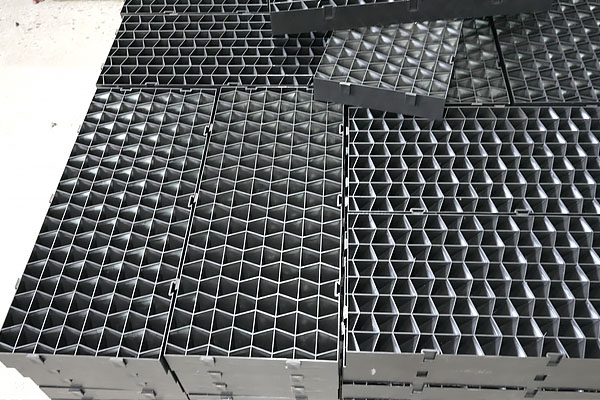
Seville Cooling tower air inlet grille
Make A Call +8613403188968
Email Address chenhan199966@gmail.com
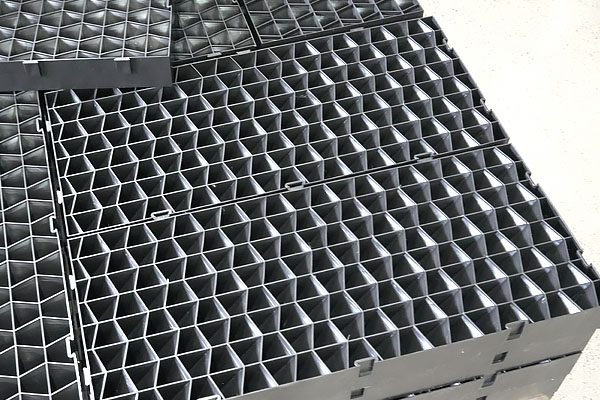
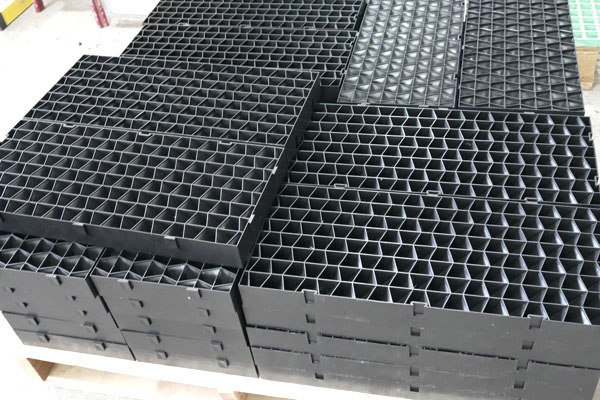
Cooling Tower Air Inlet Grille
Practical Protection and Airflow Control for Cooling Towers
What an Air Inlet Grille Does in a Cooling Tower
A cooling tower air inlet grille is installed at the air intake side of the cooling tower and is mainly used to protect the tower while allowing outside air to enter smoothly. In simple terms, it acts as a barrier between the outdoor environment and the internal components of the cooling tower.
From real site experience, the air inlet grille is often the first line of defense. It helps keep large debris, leaves, birds, and other foreign objects from entering the tower, while still maintaining enough open area for proper airflow. Without a grille, internal components like fill media, drift eliminators, and spray systems are more exposed and more likely to get damaged or contaminated over time.
In many projects, air inlet grilles are used together with air inlet louvers, or they are designed as a combined structure, depending on the cooling tower type and site requirements.
How Air Inlet Grilles Affect Airflow in Practice
In theory, a grille should allow air to pass through with minimal resistance. In practice, this depends on the bar spacing, profile shape, and installation quality. A well-designed cooling tower air inlet grille provides adequate open area so airflow is not restricted, while still offering enough strength and protection.
If the grille spacing is too tight, airflow resistance increases and fan energy consumption goes up. If spacing is too wide, protection is reduced and debris can enter the tower. Good grille design finds a balance between airflow performance and mechanical protection.
From an operational point of view, easy access and simple cleaning are also important. Grilles that trap dirt and leaves but are hard to clean quickly become a maintenance problem.
Materials Commonly Used for Air Inlet Grilles
Cooling tower air inlet grilles are typically made from materials that can withstand outdoor exposure and continuous moisture:
PVC or PP grilles for standard cooling tower applications
FRP grilles for higher strength and better weather resistance
Galvanized steel or aluminum grilles where higher mechanical strength or site regulations require metal components
Material selection usually depends on the cooling tower size, wind load, environment, and expected service life.
Where Cooling Tower Air Inlet Grilles Are Used
Air inlet grilles are widely used in:
Counterflow cooling towers
Crossflow cooling towers
Industrial cooling tower installations
HVAC and district cooling systems
Cooling tower retrofit and upgrade projects
They are especially important in outdoor installations where dust, leaves, and debris are common.
Why Air Inlet Grilles Matter More Than People Expect
From a practical engineering standpoint, a properly selected cooling tower air inlet grille helps:
Protect internal cooling tower components
Reduce maintenance caused by debris buildup
Maintain stable airflow conditions
Improve overall cooling tower reliability
Keep the installation site cleaner and safer
While air inlet grilles are not a complex component, choosing the right design and material can make day-to-day operation much easier.
Contact Us
If you are looking for cooling tower air inlet grilles or need advice on selecting the right grille for your cooling tower, we can help based on real project experience.
We offer:
Practical recommendations for grille spacing and materials
Solutions for new cooling towers and retrofit projects
Stable manufacturing and consistent quality
Support for international industrial cooling tower projects
Contact us to discuss your cooling tower requirements, request technical details, or receive a quotation tailored to your operating conditions.
Feel Free to Contact Us, Get In Touch
We're here to assist you in any way we can. Whether you have questions, feedback, or just want to say hello
Location Shenzhou City, Hebei, China.
Email Address chenhan199966@gmail.com
Make A Call +8613403188968
Common problems with cooling tower fill
Based on inquiries from most of our clients, we have compiled some important points to note when purchasing cooling tower packing materials. We hope this information will be helpful to you.
Contact UsOur cooling tower fill is primarily made from high-performance PVC or PP (Polypropylene). These materials offer excellent heat transfer, corrosion resistance, and long service life for your cooling tower fill system.
Yes, our cooling tower fill packs are custom-cut and shaped to fit. Simply provide your tower’s model or dimensions, and we will manufacture the cooling tower fill to match perfectly.
The design of our cooling tower fill features an optimized surface pattern that maximizes water-air contact. This improves heat dissipation, making the cooling tower fill highly efficient for energy savings.
Under normal conditions, our cooling tower fill typically lasts 5–10 years. The actual lifespan of the cooling tower fill depends on local water quality and maintenance.
We provide free samples of our cooling tower fill for evaluation. Production orders for cooling tower fill generally ship within 15–30 days after confirmation.
Our cooling tower fill has an open grid design that resists clogging. If cleaning is needed, the cooling tower fill can be rinsed easily with low-pressure water or a mild solution.

Michael Johnson
These cooling tower fill packs have significantly improved our system's efficiency. The heat transfer performance is outstanding, and we've noticed a 20** reduction in energy consumption since installation. Highly recommended for industrial applications!
Sofia Rodriguez
Exceptional quality and durability! Our cooling tower has been running smoothly with these fill packs for over a year now. The material is resistant to scaling and corrosion, which has reduced our maintenance costs considerably.
John Smith
The installation process was straightforward, and the results speak for themselves. Our cooling tower now operates at optimal performance levels, with better water distribution and improved cooling capacity. Great product!
Valentina
We have tried several brands of cooling tower fillers, but these are by far the best. Their design maximizes the contact between air and water, thus achieving excellent cooling efficiency. Great value for money!