

How Environmental Regulations Are Influencing Cooling Tower Fill Design
Environmental regulations are becoming an important factor in the development of industrial cooling systems. Around the world, manufacturers and facility operators are working to reduce energy consumption, improve water efficiency, and extend equipment life while meeting increasingly stringent environmental requirements.
Although cooling tower fill is only one component of a cooling tower, its design directly affects thermal performance, fan power consumption, water utilization, and maintenance frequency. As regulations continue to evolve, engineers are paying greater attention to high-performance fill materials that support both operational efficiency and sustainability goals.
Why Environmental Standards Matter
Governments and industrial organizations continue encouraging facilities to improve resource efficiency and reduce the environmental impact of industrial operations. Modern cooling tower upgrades often focus on improving heat transfer while lowering operating costs.
- Reducing electricity consumption
- Improving cooling efficiency
- Lowering water loss
- Extending equipment service life
- Reducing maintenance waste
- Supporting sustainable manufacturing
Cooling Tower Fill Plays a Larger Role Than Ever
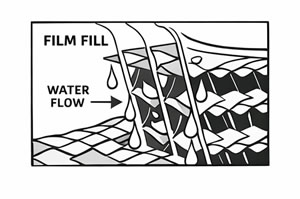
The efficiency of a cooling tower depends heavily on the performance of its fill media. Advanced fill designs create a larger contact area between water and air, allowing greater heat rejection with lower airflow resistance.
Higher thermal efficiency means cooling systems can often achieve required performance while using less fan energy, contributing to overall energy-saving objectives.
Design Improvements Driven by Sustainability
Optimized Flow Channel Design
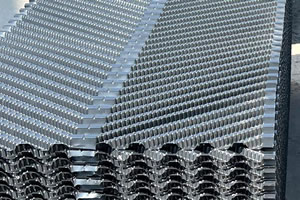
Modern fill incorporates carefully engineered corrugation patterns that improve water distribution while maintaining stable airflow through the tower.
Longer Product Service Life
Manufacturers are focusing on durable materials that reduce replacement frequency and minimize waste generated during maintenance projects.
Improved Manufacturing Quality
Automated production equipment and precision molding technologies provide more consistent dimensions and higher product reliability, helping cooling systems maintain performance over longer operating periods.
Water Conservation Becomes a Key Consideration
Water availability is becoming an increasingly important issue in many regions. Although evaporation is essential for cooling tower operation, efficient fill design helps maximize cooling effectiveness without unnecessary water losses caused by poor distribution or uneven airflow.
Benefits of Efficient Fill Design
- More uniform water coverage
- Improved heat exchange
- Reduced dry spots
- Better overall cooling efficiency
Material Selection Continues to Evolve
| Material | Typical Advantage | Application |
|---|---|---|
| PVC Film Fill | Excellent thermal efficiency | General industrial cooling |
| PP Fill | Higher temperature resistance | Chemical and heavy industry |
| Splash Fill | Excellent anti-fouling performance | Poor water quality systems |
Industrial Buyers Focus on Lifecycle Value
Instead of evaluating fill only by purchase price, engineers increasingly consider lifecycle performance. Products that reduce maintenance, improve efficiency, and last longer often provide greater long-term economic value.
Evaluation Criteria
- Heat transfer efficiency
- Durability
- Ease of maintenance
- Compatibility with existing towers
- Long-term operating costs
Industry Outlook
Future cooling tower fill development is expected to focus on higher efficiency, stronger durability, and smarter manufacturing processes. Digital quality control, optimized structural design, and improved material technology will continue supporting industrial customers seeking reliable and environmentally responsible cooling solutions.
Frequently Asked Questions
Do environmental regulations affect cooling tower fill selection?
Yes. Many facilities now prioritize fill that improves energy efficiency, reduces maintenance, and supports longer equipment service life, helping achieve sustainability objectives.
Can replacing old fill improve environmental performance?
Replacing aged or fouled fill can restore heat transfer efficiency, reduce fan energy consumption, and improve overall cooling system performance.
Which material is most widely used today?
PVC film fill remains the most widely used option for general industrial applications, while PP fill is selected for higher-temperature or more demanding operating environments.
Conclusion
Environmental expectations are encouraging continuous innovation in cooling tower fill design. Higher-performance materials, improved manufacturing quality, and optimized thermal efficiency help industrial facilities reduce operating costs while supporting long-term sustainability goals. Manufacturers that combine engineering expertise with reliable production quality are well positioned to meet the evolving needs of global cooling tower projects.
TowerFill continues to develop advanced PVC film fill, PP fill, splash fill, and customized cooling tower solutions that help industrial customers improve cooling performance while supporting energy efficiency and sustainable operation.