

Cooling Tower Fill for Power Plants: Maximizing Heat Rejection and Long-Term Reliability
Power plants depend on efficient cooling systems to maintain turbine performance, condenser efficiency, and stable electricity generation. Whether operating a coal-fired plant, combined cycle gas turbine (CCGT) facility, biomass station, or nuclear power plant, the cooling tower fill plays a vital role in transferring heat from circulating water to the atmosphere.
Because power plants operate continuously under heavy thermal loads, selecting the correct cooling tower fill is essential for maximizing heat rejection, reducing operating costs, and extending equipment life.
Cooling Requirements in Power Plants
Unlike many industrial facilities, power plants require continuous, reliable cooling under demanding operating conditions.
Main Operating Characteristics
- Continuous 24/7 operation
- Large circulating water flow
- High thermal loads
- Strict condenser temperature requirements
- Long equipment service life expectations
- Seasonal ambient temperature variations
Why Cooling Tower Fill Is Critical
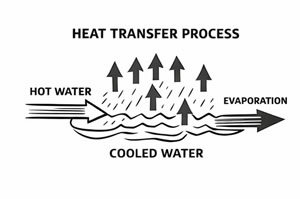
The fill pack provides the primary heat transfer surface inside the cooling tower. Well-designed fill distributes water evenly while allowing sufficient airflow to maximize evaporation and reduce condenser outlet temperatures.
Key Benefits
- Higher cooling efficiency
- Improved condenser performance
- Lower energy consumption
- Reduced fan operating costs
- Longer maintenance intervals
- Extended equipment lifespan
Recommended Cooling Tower Fill Options
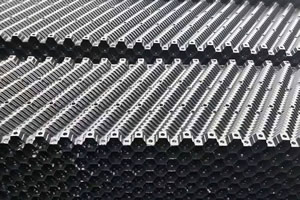
PVC Film Fill
For plants with well-treated circulating water, PVC film fill offers outstanding heat transfer performance and excellent operating efficiency.
Wide-Spaced Film Fill
Where suspended solids or moderate fouling are present, wide-spaced film fill provides a balance between cooling performance and resistance to blockage.
PP Fill
Power plants operating with elevated circulating water temperatures may benefit from polypropylene fill because of its superior temperature resistance.
Fill Selection Guide
| Operating Condition | Recommended Fill | Main Benefit |
|---|---|---|
| Clean Water Systems | PVC Film Fill | Maximum heat transfer |
| Moderate Fouling | Wide-Spaced Film Fill | Reduced clogging |
| High Temperature | PP Fill | Excellent thermal resistance |
| Poor Water Quality | Splash Fill | Superior anti-fouling performance |
Important Selection Factors
Circulating Water Quality
Analyze hardness, suspended solids, biological activity, and scaling potential before selecting fill.
Cooling Capacity
The fill should meet the plant's required heat rejection without creating excessive airflow resistance.
Maintenance Strategy
Select fill that supports planned shutdown intervals and simplifies inspection and replacement.
Common Problems Caused by Incorrect Fill Selection
- Reduced cooling efficiency
- Higher condenser temperatures
- Increased fan energy consumption
- Premature fouling
- Frequent maintenance shutdowns
- Higher operating costs
Maintenance Best Practices
- Monitor circulating water quality.
- Inspect fill annually during planned outages.
- Maintain proper water treatment.
- Clean biological growth and scale promptly.
- Replace damaged fill modules before efficiency declines.
Applications in Power Generation
Coal-Fired Power Plants
Reliable cooling tower fill helps maintain condenser performance and overall plant efficiency.
Combined Cycle Power Plants
Efficient heat rejection supports stable turbine operation and lowers energy consumption.
Biomass Power Stations
Wide-spaced or splash fill may be preferable where circulating water contains more suspended solids.
Frequently Asked Questions
Which cooling tower fill is best for power plants?
PVC film fill is ideal for clean-water systems, while wide-spaced film fill or PP fill may be more suitable depending on water quality and operating temperature.
Can replacing cooling tower fill improve condenser performance?
Yes. Replacing aged or fouled fill restores heat transfer efficiency, helping lower condenser temperatures and improve plant performance.
How long does cooling tower fill last in a power plant?
Service life depends on water quality, maintenance, and operating conditions, but high-quality fill can provide many years of reliable performance when properly maintained.
Why Choose TowerFill?
TowerFill manufactures PVC film fill, PP fill, splash fill, drift eliminators, and customized cooling tower components for power generation facilities worldwide. Our engineering team provides tailored recommendations to maximize cooling efficiency and reduce long-term operating costs.
Conclusion
Selecting the correct cooling tower fill is essential for maximizing heat rejection and ensuring reliable long-term operation in power plants. By matching fill type to water quality, operating temperature, and maintenance strategy, plant operators can improve cooling performance while reducing energy consumption and lifecycle costs.