

The cooling tower fill price is influenced by several factors, including material selection, product structure, dimensions, manufacturing specifications, order quantity and packaging requirements. For international buyers, the quotation may also depend on the requested trade terms and export arrangements. Understanding these factors helps purchasing managers prepare accurate inquiries and evaluate product costs based on their actual project requirements rather than comparing prices by unit cost alone.
1. Material Selection: PVC or PP
Material is one of the factors that can influence the cost of cooling tower fill. PVC (Polyvinyl Chloride) and PP (Polypropylene) are commonly used materials, but their raw material costs, formulations and processing requirements may differ.
The final material cost depends on the specific grade, additives and product requirements. For example, a project requiring a particular material formulation or additional material characteristics may involve different sourcing and processing considerations.
Buyers should specify whether they need PVC cooling tower fill or PP cooling tower fill. If the material has not been determined, provide the operating temperature, water chemistry and chemical exposure information so the supplier can review suitable options.
2. Fill Type and Product Structure
Different cooling tower fill structures involve different product configurations and material requirements. Common options include:
- Film fill: Formed plastic sheets with specific corrugated profiles and channel arrangements.
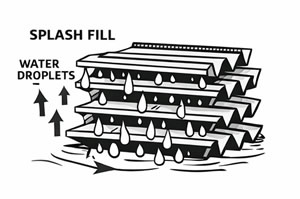
- Splash fill: Structural elements designed to disperse falling water.
- Splash grid fill: Modular open-grid structures assembled according to product specifications.
- Crossflow and counterflow fill: Products configured to match different cooling tower airflow and water distribution arrangements.
Individual fill sheets and assembled fill packs may also have different supply and assembly requirements. Buyers should clearly identify the required product type and supply form when requesting a quotation.
3. Dimensions, Thickness and Product Specifications
Product dimensions directly affect the quantity of material required and the complexity of the product configuration. Larger fill packs, thicker sheets or specific corrugated profiles may involve different material consumption and processing requirements.
For replacement orders, suppliers may need to review:
- Individual sheet length and width
- Sheet thickness and flute geometry
- Sheet spacing and arrangement
- Fill pack length, width and height
- Crossflow or counterflow configuration
Accurate specifications are important because products with similar external dimensions may still have different internal structures. Providing drawings, photographs or existing product samples can help clarify the required configuration.
4. Customization and Order Quantity
Standard product specifications and customized requirements may involve different quotation considerations. Custom dimensions, special cutting requirements, particular assembly arrangements or project-specific configurations can require additional coordination and processing.
Order quantity is another important factor. The total material requirement, order preparation and packaging arrangement may change depending on the quantity being purchased. A quotation for a small replacement requirement may therefore have a different cost structure from a larger supply order.
When requesting a quotation, provide the estimated or confirmed quantity and identify any non-standard requirements. Do not assume that a customized product has the same pricing basis as a standard specification.
5. Packaging and Export Requirements
Packaging is particularly relevant when purchasing cooling tower fill for international delivery. Individual sheets and assembled fill packs may require different packing arrangements depending on their dimensions, structure and protection requirements.
Buyers should communicate whether the order requires individual sheet packaging, assembled pack packaging or other agreed arrangements. Packaging choices can affect the shipment volume and the overall quotation scope.
The destination country and port, together with the requested EXW or FOB trade term, should also be specified. Different trade terms define different commercial scopes, so buyers should confirm which charges and responsibilities are included in the quotation.
6. How to Obtain a More Accurate Cooling Tower Fill Quote
To help suppliers prepare a relevant quotation, provide the following information whenever available:
- Cooling tower type and crossflow or counterflow arrangement
- Required fill type and material
- Product dimensions and thickness specifications
- Required quantity
- Application and operating conditions
- Product photographs, drawings or reference samples
- Destination port and preferred EXW or FOB terms
At TowerFill.com, international B2B buyers can submit their product requirements for cooling tower fill supply and quotation. Providing complete specifications helps clarify the required product configuration and quotation scope. Before confirming an order, review the material, dimensions, quantity and packaging details to ensure that the quotation matches the actual purchasing requirements.