

Cooling Tower Fill Maintenance Checklist: Best Practices for Long-Term Performance
Regular maintenance is essential for maximizing the performance and lifespan of Cooling Tower Fill. Even the highest-quality fill media will gradually lose efficiency if scale, biological growth, debris, or damaged components are left untreated. A proactive maintenance program helps maintain efficient heat transfer, reduce operating costs, and avoid unplanned shutdowns.
This maintenance checklist outlines the key inspection points, cleaning procedures, and preventive practices that help keep commercial and industrial cooling towers operating at peak performance throughout the year.
Rather than waiting for cooling capacity to decline, facility managers should schedule regular inspections based on operating hours, water quality, and seasonal conditions. Preventive maintenance almost always costs less than emergency repairs or premature fill replacement.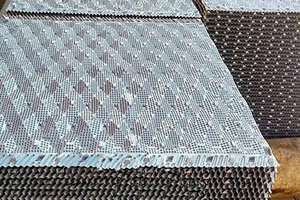
Why Cooling Tower Fill Maintenance Matters
Cooling tower fill provides the surface where water and air exchange heat. When the fill becomes clogged with scale, algae, or suspended solids, airflow is restricted and water can no longer spread evenly across the media. As a result, cooling efficiency drops while fan and pump energy consumption increases.
Routine maintenance helps preserve thermal performance while extending the service life of PVC Cooling Tower Fill Media, PP Cooling Tower Fill, and other internal cooling tower components.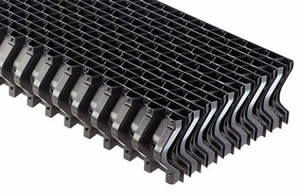
Routine Inspection Checklist
A complete inspection should include the following items:
- Check fill packs for scale, algae, and dirt buildup.
- Inspect for cracked, warped, or collapsed fill sections.
- Verify uniform water distribution across the fill surface.
- Look for blocked airflow passages.
- Inspect support structures for corrosion or damage.
- Check spray nozzles for clogging or uneven flow.
- Inspect Drift Eliminators for damage or excessive fouling.
- Ensure Cooling Tower Air Inlet Louvers are clean and unobstructed.
Documenting inspection results allows maintenance teams to monitor equipment condition over time and identify trends before they become major problems.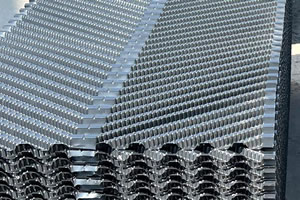
Cleaning Best Practices
Cleaning frequency depends on water quality, environmental conditions, and operating hours. Towers located in dusty industrial areas or using untreated water typically require more frequent maintenance.
For most installations, cleaning should focus on removing loose debris, biological growth, and mineral deposits without damaging the fill structure. High-pressure washing should be used carefully, as excessive pressure may deform film fill sheets.
When deposits cannot be removed through normal cleaning, replacing damaged sections with the correct Counterflow Film Fill, Crossflow Film Fill, or Splash Grid Fill may be the more economical long-term solution.
Water Treatment Is Part of Maintenance
Even the best maintenance schedule cannot compensate for poor water quality. An effective water treatment program helps prevent mineral scale, corrosion, and biological fouling, allowing Cooling Tower Fill to operate at maximum efficiency for a longer period.
Facility operators should routinely monitor water chemistry, including pH, conductivity, hardness, and microbiological activity. Maintaining these parameters within recommended ranges reduces maintenance frequency and extends the lifespan of PVC Cooling Tower Fill Media and PP Cooling Tower Fill.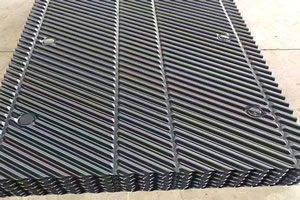
Recommended Maintenance Schedule
| Maintenance Item | Recommended Frequency |
|---|---|
| Visual inspection of fill media | Monthly |
| Check water distribution system | Monthly |
| Inspect Drift Eliminators and Louvers | Every 3–6 Months |
| Clean fill if scaling is observed | As Required |
| Comprehensive cooling tower inspection | Annually |
| Replace damaged fill sections | When Necessary |
Frequently Asked Questions
How often should cooling tower fill be inspected?
A visual inspection should be performed at least once a month, while a comprehensive inspection is recommended annually or during scheduled shutdowns.
Can cooling tower fill be cleaned instead of replaced?
Yes. Light scale and biological fouling can usually be removed through proper cleaning. However, brittle, cracked, or severely clogged fill should be replaced to restore cooling efficiency.
Does regular maintenance reduce energy consumption?
Absolutely. Clean fill media improves heat transfer, allowing fans, pumps, and chillers to operate more efficiently and reducing overall electricity consumption.
Which fill type requires less maintenance?
Maintenance requirements depend more on water quality and operating conditions than on material type. Both PVC Cooling Tower Fill Media and PP Cooling Tower Fill provide long service life when supported by proper water treatment and routine inspections.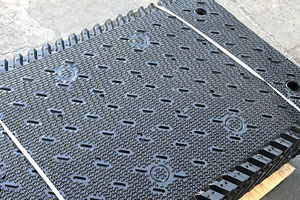
Conclusion
Consistent maintenance is one of the most effective ways to protect cooling tower performance and reduce long-term operating costs. Regular inspections, proper cleaning, effective water treatment, and timely replacement of worn components help maintain efficient heat transfer and extend the service life of the entire cooling system.
Whether your cooling tower uses Counterflow Film Fill, Crossflow Film Fill, Splash Grid Fill, PVC Cooling Tower Fill Media, or PP Cooling Tower Fill, following a preventive maintenance program will maximize cooling efficiency and equipment reliability.
Keep Your Cooling Tower Performing at Its Best
We manufacture high-quality cooling tower fill solutions for commercial and industrial applications. Our experienced engineering team can help you select replacement fill, optimize tower performance, and reduce maintenance costs.
- Counterflow Film Fill
- Crossflow Film Fill
- PVC Cooling Tower Fill Media
- PP Cooling Tower Fill
- Splash Grid Fill
- Drift Eliminators
- Cooling Tower Air Inlet Louvers
For product recommendations, technical support, or a customized quotation, please contact our engineering team.