

Cooling Tower Fill Replacement Guide: When and How to Replace Fill Media
Cooling tower fill is the core component responsible for heat exchange inside a cooling tower. As water flows over the fill media, a large contact surface is created between water and air, allowing heat to dissipate efficiently through evaporation. However, even high-quality fill media will eventually reach the end of its service life due to scaling, fouling, aging, or physical damage.
Replacing worn Cooling Tower Fill at the right time can restore cooling efficiency, reduce energy consumption, and prevent unexpected downtime. Delaying replacement often leads to reduced system performance, increased maintenance costs, and higher operating expenses.
This guide explains how to identify worn cooling tower fill, determine the best replacement timing, select suitable replacement materials, and complete a successful retrofit project.
Why Cooling Tower Fill Needs Replacement
Cooling tower fill continuously operates in a wet environment while being exposed to heat, chemicals, airborne contaminants, and biological growth. Over time, these factors gradually reduce the fill's ability to distribute water evenly and transfer heat efficiently.
Common reasons for replacement include:
- Heavy mineral scale accumulation
- Biological fouling and algae growth
- Cracked or brittle fill sheets
- Mechanical damage during maintenance
- Chemical degradation
- Long-term aging of the fill material
Once these problems become severe, cleaning alone may no longer restore the original cooling performance.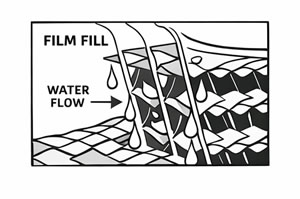
Signs Your Cooling Tower Fill Should Be Replaced
Routine inspections help identify replacement needs before cooling efficiency drops significantly. Some common warning signs include:
- Higher-than-normal cold water temperature
- Reduced cooling capacity during peak summer operation
- Broken or collapsed fill packs
- Severe scaling that cannot be removed by cleaning
- Uneven water distribution across the fill surface
- Visible deformation caused by excessive heat
If several of these symptoms appear simultaneously, replacing the fill media is usually more cost-effective than repeated cleaning.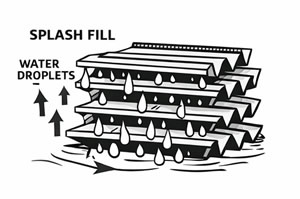
Choosing the Right Replacement Fill
Not all cooling tower fill is the same. Replacement fill should match the original tower design, operating temperature, and water quality.
For most commercial cooling systems, PVC Cooling Tower Fill Media offers excellent cooling efficiency and cost performance. Industrial applications with elevated temperatures or aggressive chemicals often benefit from PP Cooling Tower Fill, which provides superior thermal stability and chemical resistance.
The cooling tower configuration should also be considered. Counterflow towers require Counterflow Film Fill, while crossflow towers are designed for Crossflow Film Fill.
Steps for Replacing Cooling Tower Fill
A successful fill replacement project involves more than simply removing the old media. Following a systematic procedure helps ensure long-term performance.
- Shut down the cooling tower and isolate the water system.
- Remove damaged fill carefully to avoid damaging the support structure.
- Inspect the fill support beams and framework.
- Clean accumulated debris from the basin and internal components.
- Install the new fill according to the manufacturer's recommendations.
- Verify proper water distribution before restarting the system.
Replacing the fill also provides an excellent opportunity to inspect related components, including Drift Eliminators and Cooling Tower Air Inlet Louvers, ensuring the entire cooling tower operates efficiently.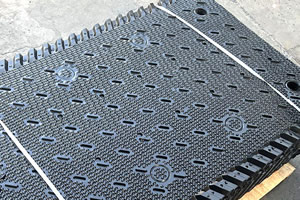
Benefits of Replacing Cooling Tower Fill
Installing new Cooling Tower Fill provides immediate and long-term operational benefits. New fill restores the designed heat transfer surface, allowing water and air to contact more efficiently. This improves cooling performance while reducing the workload on fans, pumps, and chillers.
Many facilities notice lower energy consumption after replacing heavily fouled or damaged fill. Improved airflow also helps stabilize cooling performance during periods of high ambient temperature, reducing the risk of production interruptions.
Additional benefits include:
- Improved cooling efficiency and approach temperature
- Lower fan and pump energy consumption
- Reduced maintenance frequency
- More uniform water distribution
- Longer service life for other cooling tower components
- Lower overall operating costs
Maintenance Tips After Fill Replacement
Replacing the fill is only the first step. Proper maintenance is essential to maximize the service life of the new media and maintain peak cooling performance.
- Maintain a consistent water treatment program.
- Monitor water hardness and biological growth regularly.
- Inspect fill packs every 6–12 months.
- Remove debris before it blocks airflow.
- Check spray nozzles for uniform water distribution.
- Inspect Drift Eliminators and Cooling Tower Air Inlet Louvers during scheduled shutdowns.
Routine preventive maintenance can significantly extend the service life of both PVC Cooling Tower Fill Media and PP Cooling Tower Fill.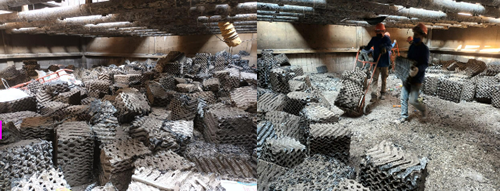
Frequently Asked Questions
How often should cooling tower fill be replaced?
There is no fixed replacement interval. Service life depends on water quality, operating temperature, maintenance practices, and environmental conditions. Many fill packs remain in service for 8–15 years with proper maintenance.
Can old cooling tower fill always be cleaned instead of replaced?
No. Cleaning is effective for light scaling and biological fouling, but severely damaged, brittle, or collapsed fill should be replaced to restore cooling efficiency.
Which replacement material is better, PVC or PP?
PVC Cooling Tower Fill Media is suitable for most commercial and standard industrial applications, while PP Cooling Tower Fill is recommended for higher-temperature or chemically demanding environments.
Should other cooling tower components be replaced at the same time?
Yes. During a fill replacement project, it is recommended to inspect or replace worn Drift Eliminators, Cooling Tower Air Inlet Louvers, spray nozzles, and damaged support structures to ensure optimal performance.
Conclusion
Replacing aging cooling tower fill at the appropriate time is one of the most effective ways to improve cooling efficiency, reduce energy consumption, and extend equipment life. Selecting the correct replacement media based on tower configuration, operating temperature, and water quality ensures long-term reliability and minimizes maintenance costs.
Whether your project requires Counterflow Film Fill, Crossflow Film Fill, PVC Cooling Tower Fill Media, PP Cooling Tower Fill, or Splash Grid Fill, investing in the right solution will help maximize the efficiency of your cooling system for years to come.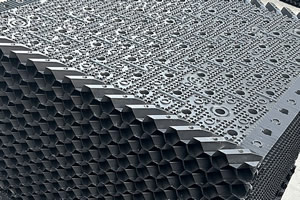
Need Professional Cooling Tower Fill Replacement Solutions?
We supply a complete range of cooling tower fill products for commercial and industrial applications, including customized sizes, OEM manufacturing, and technical support for replacement projects.
- Counterflow Film Fill
- Crossflow Film Fill
- PVC Cooling Tower Fill Media
- PP Cooling Tower Fill
- Splash Grid Fill
- Drift Eliminators
For technical consultation or a customized quotation, please contact our engineering team.