

How to Choose the Right Cooling Tower Fill Material: PVC vs PP
Selecting the right material for Cooling Tower Fill is essential for achieving reliable thermal performance, long service life, and low maintenance costs. While the structure of the fill affects heat transfer efficiency, the material itself determines how well the fill withstands temperature, chemicals, and long-term operating conditions.
Among the available materials, PVC and polypropylene (PP) are the two most widely used options. Each offers unique advantages depending on the application, water quality, and operating environment.
This article compares PVC and PP cooling tower fill to help engineers, contractors, and facility managers select the most suitable solution for their cooling systems.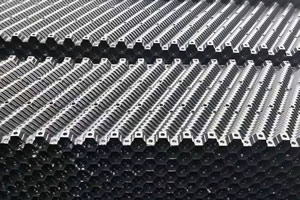
Why Fill Material Matters
Cooling tower fill operates continuously under wet conditions while being exposed to temperature fluctuations, dissolved minerals, chemicals, and airborne contaminants. Choosing the wrong material may lead to premature aging, deformation, or reduced cooling efficiency.
The proper fill material improves durability, minimizes maintenance requirements, and helps maintain stable cooling performance throughout the equipment's service life.
PVC Cooling Tower Fill
PVC Cooling Tower Fill Media is the most common choice for commercial HVAC systems and standard industrial cooling towers. It combines excellent heat transfer efficiency with corrosion resistance and cost-effectiveness.
Advantages of PVC fill include:
- Excellent heat transfer performance
- Lightweight and easy to install
- Good resistance to corrosion and biological growth
- Cost-effective for most cooling tower applications
- Suitable for counterflow and crossflow tower designs
PVC fill performs best in systems operating within standard temperature ranges and with properly treated circulating water.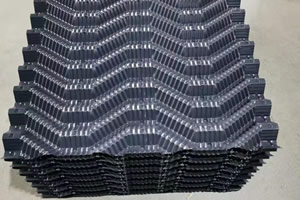
PP Cooling Tower Fill
PP Cooling Tower Fill is designed for more demanding industrial environments where higher water temperatures or aggressive chemicals may exceed the capabilities of PVC.
Benefits of PP fill include:
- Excellent resistance to high temperatures
- Superior chemical resistance
- Long service life in harsh industrial environments
- High mechanical strength
- Suitable for power plants, petrochemical facilities, and heavy industry
Although PP fill generally has a higher initial cost, its durability often results in lower long-term replacement and maintenance expenses under severe operating conditions.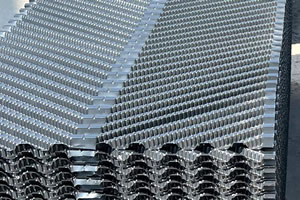
PVC vs PP: Key Differences
| Feature | PVC Fill | PP Fill |
|---|---|---|
| Heat Resistance | Standard operating temperatures | High-temperature applications |
| Chemical Resistance | Very Good | Excellent |
| Cost | More economical | Higher initial investment |
| Typical Applications | Commercial HVAC, general industry | Power plants, chemical processing, heavy industry |
| Service Life | Long with proper maintenance | Extended in demanding environments |
How to Select the Best Fill Material
Choosing between PVC and PP depends on several operating factors rather than simply selecting the strongest material. Before purchasing replacement Cooling Tower Fill, evaluate:
- Operating water temperature
- Water chemistry and chemical concentration
- Cooling tower design (counterflow or crossflow)
- Maintenance frequency
- Expected service life
- Total lifecycle cost rather than initial purchase price
For most HVAC systems, commercial buildings, and light industrial cooling towers, PVC Cooling Tower Fill Media offers the ideal balance of performance and affordability. Facilities operating with elevated temperatures or aggressive chemicals should consider PP Cooling Tower Fill for improved durability.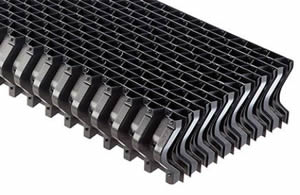
Maintenance Considerations
Regardless of the material selected, regular maintenance is essential for preserving cooling efficiency. Scale, biological fouling, and debris can reduce heat transfer performance even when the fill itself remains structurally sound.
- Inspect fill packs every month.
- Maintain proper water treatment.
- Clean deposits before severe fouling develops.
- Replace damaged fill modules promptly.
- Inspect Drift Eliminators and Cooling Tower Air Inlet Louvers during routine maintenance.
Preventive maintenance extends equipment life while ensuring that both PVC and PP fill continue to operate at peak thermal efficiency.
Frequently Asked Questions
Is PP always better than PVC?
No. PP performs better in high-temperature and chemically demanding environments, while PVC is more economical and provides excellent performance for most commercial cooling tower applications.
Can PVC fill be used in industrial cooling towers?
Yes. Many industrial systems operate successfully with PVC Cooling Tower Fill Media, provided operating temperatures and water chemistry remain within recommended limits.
When should PP cooling tower fill be selected?
PP is recommended for systems exposed to higher water temperatures, strong chemicals, or harsh industrial operating conditions where long-term durability is the priority.
How long do PVC and PP fill materials last?
Both materials can provide many years of reliable service when combined with proper water treatment, routine inspections, and scheduled maintenance. Actual service life depends on operating conditions.
Conclusion
Selecting the right cooling tower fill material directly affects cooling efficiency, maintenance costs, and equipment lifespan. PVC Cooling Tower Fill Media remains the preferred solution for most commercial and standard industrial systems due to its excellent heat transfer performance and affordability. For demanding applications involving elevated temperatures or aggressive chemicals, PP Cooling Tower Fill provides superior durability and long-term reliability.
By matching the fill material to your operating conditions and maintaining the system properly, you can maximize thermal performance while reducing long-term operating costs.
Select the Right Cooling Tower Fill for Your Application
We manufacture high-performance cooling tower fill solutions for HVAC systems, industrial cooling, power generation, and water treatment facilities. Our engineering team can help you choose the optimal fill material based on operating temperature, water quality, and tower configuration.
- PVC Cooling Tower Fill Media
- PP Cooling Tower Fill
- Counterflow Film Fill
- Crossflow Film Fill
- Splash Grid Fill
- Drift Eliminators
- Cooling Tower Air Inlet Louvers
For technical support or a customized quotation, please contact our engineering team.