

When Should You Replace Cooling Tower Fill? 7 Warning Signs You Shouldn't Ignore
Cooling Tower Fill is one of the most important components inside a cooling tower, providing the surface area necessary for efficient heat exchange between water and air. However, even high-quality fill media has a limited service life. As it ages or becomes damaged, cooling performance gradually declines, increasing energy consumption and maintenance costs.
Recognizing the warning signs of deteriorating fill allows facility managers to schedule replacement before efficiency losses become severe. A proactive replacement strategy helps avoid unexpected downtime while maintaining reliable cooling performance.
This guide explains the seven most common indicators that your cooling tower fill should be replaced and offers practical recommendations for selecting the right replacement solution.
1. Cooling Performance Continues to Decline
If your cooling tower can no longer achieve its designed approach temperature despite proper fan operation and water flow, deteriorated fill may be the primary cause. Reduced heat transfer often indicates that the fill surface has become blocked or damaged.
2. Severe Mineral Scaling
Heavy mineral deposits reduce the effective heat transfer surface and restrict airflow through the fill pack. While light scaling can usually be cleaned, thick, hardened deposits often cannot be removed without damaging the media.
When cleaning no longer restores performance, replacing the affected Counterflow Film Fill or Crossflow Film Fill is typically the most cost-effective solution.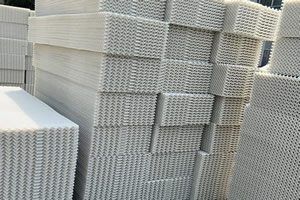
3. Cracked or Brittle Fill Sheets
Long-term exposure to ultraviolet light, chemicals, and thermal cycling gradually weakens fill materials. Brittle sheets may crack, break, or collapse, reducing structural stability and preventing uniform water distribution.
4. Persistent Biological Fouling
If algae, bacteria, or biofilm quickly return after cleaning, the fill surface may have deteriorated beyond effective maintenance. Persistent fouling not only reduces cooling efficiency but also increases maintenance frequency and operating costs.
5. Uneven Water Distribution
Healthy fill media distributes water evenly across its entire surface. If portions of the fill become blocked, warped, or damaged, water begins to channel through limited paths instead of forming a uniform film. This reduces the available heat transfer area and lowers overall cooling efficiency.
During routine inspections, look for dry spots, excessive splashing, or uneven wetting patterns, as these are often signs that the fill should be replaced.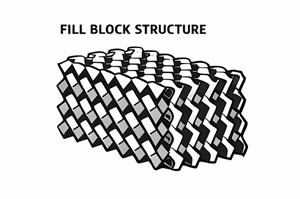
6. Fill Has Reached the End of Its Service Life
Even under ideal operating conditions, cooling tower fill does not last forever. Years of continuous exposure to water, heat, chemicals, and environmental contaminants gradually weaken the material. If your fill has been in service for many years and requires increasingly frequent maintenance, replacement is usually more economical than repeated repairs.
For standard HVAC and industrial cooling systems, PVC Cooling Tower Fill Media provides excellent long-term performance. For higher-temperature or chemically aggressive applications, PP Cooling Tower Fill offers greater durability.
7. Rising Energy Consumption
A decline in heat transfer efficiency forces fans, pumps, and chillers to work harder to achieve the required cooling capacity. If energy costs continue to increase while operating conditions remain unchanged, deteriorated fill media may be contributing to the problem.
Replacing worn fill often restores airflow and heat exchange efficiency, helping reduce electricity consumption and improve overall system performance.
How to Choose the Right Replacement Fill
When replacing cooling tower fill, it is important to match the replacement media with the original tower design and operating conditions.
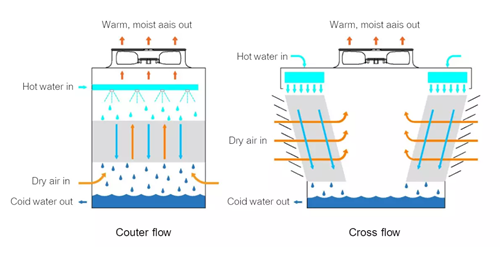
- Use Counterflow Film Fill for counterflow cooling towers.
- Use Crossflow Film Fill for crossflow cooling towers.
- Select Splash Grid Fill for dirty water or high suspended solids applications.
- Choose PVC Cooling Tower Fill Media for standard operating conditions.
- Select PP Cooling Tower Fill for elevated temperatures or aggressive chemical environments.
Frequently Asked Questions
How long does cooling tower fill typically last?
Service life depends on water quality, operating temperature, maintenance practices, and environmental conditions. With proper maintenance, cooling tower fill can often remain in service for 8–15 years or longer.
Can damaged fill be repaired?
Minor localized damage may be repaired, but cracked, collapsed, or heavily scaled fill usually requires replacement to restore cooling performance.
Does replacing cooling tower fill reduce energy costs?
Yes. New fill restores the designed heat transfer surface, allowing the cooling tower to operate more efficiently and reducing the workload on fans, pumps, and chillers.
Should other components be inspected during fill replacement?
Absolutely. Replacement projects should also include inspection of Drift Eliminators, Cooling Tower Air Inlet Louvers, spray nozzles, and support structures to ensure maximum system efficiency.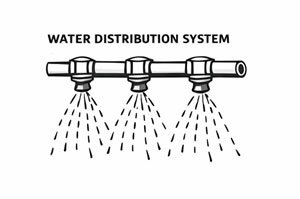
Conclusion
Ignoring worn cooling tower fill can lead to reduced cooling capacity, higher operating costs, and unnecessary equipment stress. By recognizing these seven warning signs early, facility managers can schedule timely replacement and restore system efficiency before major problems develop.
Whether your application requires Counterflow Film Fill, Crossflow Film Fill, Splash Grid Fill, PVC Cooling Tower Fill Media, or PP Cooling Tower Fill, selecting the correct replacement media will maximize cooling efficiency and extend the service life of your cooling tower.
Need Replacement Cooling Tower Fill?
We supply high-quality cooling tower fill solutions for commercial HVAC systems, industrial process cooling, power plants, and water treatment facilities. Our engineering team can recommend the most suitable replacement fill based on your tower design and operating conditions.
- Counterflow Film Fill
- Crossflow Film Fill
- Splash Grid Fill
- PVC Cooling Tower Fill Media
- PP Cooling Tower Fill
- Drift Eliminators
- Cooling Tower Air Inlet Louvers
For technical support or a customized quotation, please contact our engineering team.