

Cooling Tower Fill Solutions for Steel Plants: Improving Cooling Efficiency in Harsh Operating Conditions
Steel manufacturing places some of the highest demands on industrial cooling systems. Continuous casting, rolling mills, blast furnaces, electric arc furnaces, and auxiliary equipment generate significant heat that must be removed efficiently to maintain stable production. In these environments, cooling tower fill is a critical component that directly affects heat rejection, water distribution, energy consumption, and maintenance costs.
Unlike commercial HVAC applications, steel plants often operate with circulating water containing suspended solids, scale, oil, and other contaminants. Selecting the appropriate cooling tower fill helps improve thermal performance while reducing fouling, extending service life, and lowering operating expenses.
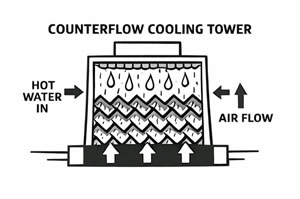
Cooling Challenges in Steel Plants
Steel production environments expose cooling towers to conditions that differ significantly from standard industrial applications.
Common Operating Conditions
- High circulating water temperatures
- Large cooling loads
- Continuous 24/7 operation
- Suspended solids and sludge
- Iron oxide contamination
- Scale formation
- Oil contamination from production equipment
These conditions require cooling tower fill that provides both excellent heat transfer and strong resistance to fouling.
Why Cooling Tower Fill Matters
Cooling tower fill increases the contact surface between water and air, allowing heat to dissipate efficiently through evaporation. However, in steel plants, selecting high-efficiency fill without considering water quality often leads to clogging, reduced airflow, and increased maintenance.
Benefits of Proper Fill Selection
- Improved cooling efficiency
- Lower circulating water temperature
- Reduced fan energy consumption
- Better resistance to fouling
- Longer equipment service life
- Reduced maintenance frequency
Selecting the Right Cooling Tower Fill
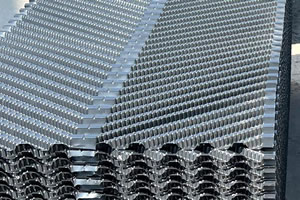
Wide-Spaced Film Fill
Wide-spaced PVC film fill provides an excellent balance between cooling performance and fouling resistance. The larger flow channels reduce blockage while maintaining efficient heat transfer.
Recommended For
- General steel production
- Rolling mills
- Secondary cooling systems
Splash Fill
Where water contains high concentrations of suspended solids or scale, splash fill is often the preferred solution. Instead of forming thin water films, splash fill breaks water into droplets, reducing the likelihood of clogging.
Recommended For
- Blast furnace cooling
- Wastewater cooling systems
- Dirty water applications
PP Cooling Tower Fill
Polypropylene (PP) fill provides excellent resistance to elevated temperatures and aggressive chemical environments. It is suitable for steel plants operating under high thermal loads.
Comparison of Fill Options
| Fill Type | Cooling Efficiency | Fouling Resistance | Typical Application |
|---|---|---|---|
| PVC Film Fill | Excellent | Medium | Clean circulating water |
| Wide-Spaced Film Fill | Very Good | High | General steel production |
| Splash Fill | Good | Excellent | Dirty industrial water |
| PP Fill | Very Good | High | High-temperature systems |
Factors to Consider Before Selecting Fill
Water Quality
Analyze suspended solids, hardness, biological growth, oil contamination, and chemical composition before selecting the fill type.
Operating Temperature
Higher water temperatures may require PP fill or specially designed high-temperature PVC solutions.
Cooling Capacity
The selected fill should match the required heat rejection capacity while maintaining acceptable airflow resistance.
Maintenance Requirements
Steel plants benefit from fill designs that simplify inspection, cleaning, and replacement during scheduled shutdowns.
Best Practices for Steel Plant Cooling Towers
- Monitor circulating water quality regularly.
- Maintain proper chemical water treatment.
- Inspect spray nozzles for blockage.
- Remove accumulated sludge during maintenance.
- Replace damaged fill before performance declines significantly.
- Inspect support grids before installing replacement fill.
Typical Applications in Steel Manufacturing
Blast Furnace Cooling
Cooling towers serving blast furnaces require durable fill capable of handling high thermal loads and contaminated water.
Continuous Casting
Reliable cooling helps maintain stable production quality and protects valuable equipment from overheating.
Rolling Mill Cooling
Proper cooling tower fill improves heat rejection while minimizing maintenance interruptions in continuous production environments.
Frequently Asked Questions
Which cooling tower fill is best for steel plants?
Wide-spaced film fill is suitable for most steel plants, while splash fill is recommended where circulating water contains high levels of suspended solids or scale.
Can PVC fill be used in steel manufacturing?
Yes. High-quality PVC film fill performs well when water quality is properly controlled. For higher temperatures or aggressive conditions, PP fill may be a better choice.
How often should cooling tower fill be inspected?
Routine visual inspections should be carried out regularly, with comprehensive inspections performed during planned maintenance shutdowns to detect fouling, deformation, or structural damage.
Why Choose TowerFill?
TowerFill specializes in manufacturing high-performance PVC film fill, PP fill, splash fill, drift eliminators, and customized cooling tower components for demanding industrial applications. Our engineering team helps steel manufacturers select fill solutions based on water quality, operating temperature, cooling capacity, and maintenance requirements.
Conclusion
Steel plants require cooling tower fill that delivers reliable thermal performance under challenging operating conditions. Selecting the right fill type based on water quality, operating temperature, and system design improves cooling efficiency, reduces maintenance costs, and extends equipment service life. By choosing engineered cooling tower fill solutions, steel manufacturers can achieve stable production while lowering long-term operating costs.