

When Should You Replace Cooling Tower Fill Instead of Cleaning It? A Practical Engineering Guide
One of the most common maintenance questions in the cooling tower industry is surprisingly simple:Should the cooling tower fill be cleaned, or is it time to replace it?
Many operators assume that poor cooling performance automatically means the fill media has reached the end of its service life. In reality, that is often not the case. Reduced thermal performance can be caused by scaling, biological fouling, uneven water distribution, blocked spray nozzles, restricted airflow, or poor water treatment—not necessarily damaged fill.
On the other hand, continuing to clean severely deteriorated fill can waste maintenance budgets while failing to restore cooling efficiency.
This guide explains how experienced engineers evaluate cooling tower fill, identify the real cause of performance loss, and determine whether cleaning or replacement is the most economical solution.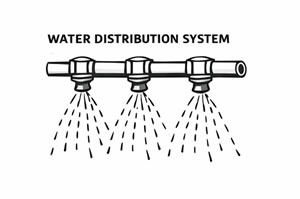
Why Cooling Tower Fill Does Not Last Forever
Cooling tower fill operates continuously under challenging conditions. Every day it is exposed to warm circulating water, fluctuating temperatures, dissolved minerals, airborne contaminants, ultraviolet radiation, and continuous airflow. Over time, these factors gradually affect both the thermal performance and the mechanical strength of the fill material.
Although modern PVC and PP cooling tower fill is designed for long service life, no fill media can maintain peak performance indefinitely. The actual lifespan depends far more on operating conditions than on age alone.
| Operating Condition | Impact on Fill Life |
|---|---|
| Stable water treatment | Longer service life |
| High hardness water | Accelerates scale formation |
| Poor filtration | Increases fouling and blockage |
| Strong sunlight and weather exposure | Accelerates material aging |
| High-temperature industrial processes | May shorten PVC service life |
For this reason, two cooling towers installed in the same year may require completely different maintenance strategies depending on how they have been operated and maintained.
Cleaning and Replacement Are Not the Same Decision
Cleaning and replacement solve different problems.
Cleaning removes contaminants that reduce heat transfer, while replacement restores the physical structure of the fill when mechanical deterioration has become irreversible.
A useful engineering principle is this:
If contamination is the problem, clean the fill.If structural damage is the problem, replace the fill.
The challenge is accurately identifying which condition exists before maintenance begins.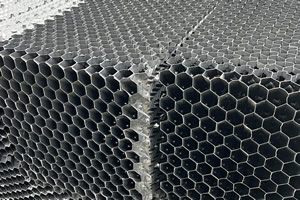
The First Step: Inspect Before You Decide
Before ordering replacement fill, conduct a systematic inspection of the entire cooling tower. Experienced maintenance teams rarely make replacement decisions based solely on appearance.
A complete inspection should include:
- Visual examination of the fill pack
- Assessment of water distribution uniformity
- Inspection of spray nozzles
- Evaluation of airflow through the tower
- Measurement of approach temperature
- Review of recent water treatment records
- Inspection of support structures
Many cooling towers regain acceptable performance after correcting water distribution or cleaning blocked nozzles. Replacing fill without diagnosing the real problem often results in unnecessary expense while the original issue remains unresolved.
7 Clear Signs Your Cooling Tower Fill Should Be Replaced
Not every reduction in cooling performance justifies replacing the fill media. However, certain warning signs indicate that the fill has reached the end of its practical service life and that cleaning alone is unlikely to restore performance.
1. The Fill Has Become Brittle
PVC fill gradually loses flexibility after years of exposure to heat, ultraviolet light, and chemical attack. During inspection, if the sheets crack easily when gently handled, the material has already begun to degrade structurally.
Once brittleness appears, the fill is more susceptible to breakage during maintenance and cannot reliably support long-term operation.
2. Large Sections Have Collapsed
Fill packs rely on their designed geometry to distribute water and maintain airflow. When support sheets collapse or deform, water channels become irregular, airflow is restricted, and cooling efficiency decreases significantly.
Localized damage may be repairable, but widespread collapse usually requires replacement.
3. Cleaning No Longer Improves Performance
If the fill has been professionally cleaned and water treatment has been corrected, yet approach temperature remains high, the material itself may have permanently lost its designed heat-transfer capability.
Repeated cleaning without measurable improvement often indicates structural aging rather than surface contamination.
4. Continuous Cracking During Maintenance
When technicians notice that fill sheets continue breaking during normal inspection or removal, it is generally a sign that the material has exceeded its useful mechanical life.
Attempting to reuse severely cracked fill frequently leads to uneven water distribution and future failures.
5. Permanent Blockage Inside the Flow Channels
Heavy mineral deposits, hardened sludge, or long-term biological fouling can permanently reduce the available flow area inside film fill channels. If these deposits cannot be removed safely without damaging the sheets, replacement becomes the more practical solution.
6. Rising Operating Costs
Many facilities continue repairing aging fill because replacement appears expensive. However, frequent shutdowns, repeated cleaning, reduced cooling efficiency, and higher energy consumption often cost far more over several years than installing new fill media.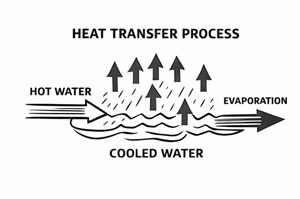
7. The Existing Fill No Longer Matches the Operating Conditions
Some cooling towers change application during their lifetime. A system originally designed for clean HVAC water may later be used for industrial process cooling with much higher suspended solids.
In these situations, replacing the fill with a design better suited to the new operating environment often delivers better long-term reliability than continuing to maintain the original configuration.
Engineering Assessment: Clean or Replace?
| Observed Condition | Recommended Action | Reason |
|---|---|---|
| Light dust and loose debris | Routine cleaning | No structural damage present |
| Moderate calcium scale | Chemical cleaning | Heat transfer can usually be restored |
| Biological slime | Cleaning + improve water treatment | Prevent rapid recurrence |
| Broken or collapsed fill blocks | Replace damaged sections | Mechanical integrity has been lost |
| Severe brittleness throughout the fill pack | Complete replacement | Material has reached end of service life |
Real Engineering Case: Cleaning Was Enough
A commercial HVAC cooling tower experienced an increase of nearly 3°C in cold-water outlet temperature during peak summer operation. Operators initially planned to replace the entire fill pack.
After inspection, engineers found that the fill remained structurally sound. The primary issues were blocked spray nozzles and moderate calcium scaling caused by inconsistent water treatment.
Following nozzle cleaning, descaling, and improved water chemistry control, the cooling tower recovered most of its original thermal performance without replacing the fill. The project significantly reduced maintenance costs and avoided unnecessary downtime.
Replacement should be the result of a technical evaluation—not the first reaction to declining cooling performance. Correct diagnosis almost always saves time, cost, and unnecessary material replacement.
How to Evaluate Cooling Tower Fill During an Annual Shutdown
The best time to evaluate cooling tower fill is during a planned maintenance shutdown. With the tower offline, maintenance personnel can safely inspect the internal condition of the fill pack, support structure, water distribution system, and airflow passages.
Rather than making a quick visual judgment, experienced engineers follow a structured inspection procedure that compares the current condition with previous maintenance records. This approach helps determine whether the fill is still performing as designed or whether replacement should be included in the next maintenance cycle.
Recommended Inspection Procedure
- Inspect the overall appearance of the fill pack for deformation, discoloration, or collapsed sections.
- Check whether water passages remain open throughout the fill block.
- Measure the amount of scale and biological fouling.
- Look for cracked or brittle sheets by gently testing several representative locations.
- Inspect support beams and fill hangers for corrosion or mechanical damage.
- Examine spray nozzles to verify that water distribution remains uniform.
- Inspect drift eliminators and air inlet louvers for blockage that could affect airflow.
- Review operating records from the previous 12 months, including approach temperature and fan power consumption.
Completing this checklist provides a much more reliable basis for maintenance decisions than simply judging the appearance of the fill from the top of the tower.
How Water Quality Influences Fill Replacement Frequency
Water quality is often the single most important factor affecting the lifespan of cooling tower fill. Two identical cooling towers operating under different water treatment programs may experience dramatically different maintenance requirements.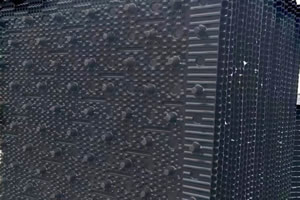
| Water Condition | Effect on Fill | Maintenance Priority |
|---|---|---|
| High Hardness | Mineral scale formation | Regular descaling |
| High Biological Activity | Biofilm accumulation | Biocide treatment |
| High Suspended Solids | Flow channel blockage | Improve filtration |
| Low Water Quality Control | Accelerated aging | Optimize water treatment |
| Stable Water Chemistry | Extended service life | Routine monitoring |
Facilities that consistently monitor conductivity, hardness, pH, biological activity, and cycles of concentration generally achieve significantly longer service life from their cooling tower fill compared with facilities relying solely on corrective maintenance.
Case Study: Why One Factory Delayed Replacement by Four Years
An industrial manufacturing facility planned to replace every fill pack across three cooling towers after approximately ten years of operation. Before issuing the purchase order, the maintenance manager requested a complete engineering inspection.
The inspection revealed that while one tower showed severe structural deterioration, the other two towers remained mechanically sound. Their reduced cooling performance was primarily caused by scale buildup and partially blocked water distribution nozzles.
After professional cleaning, nozzle replacement, and improvements to the water treatment program, the two towers continued operating efficiently for several additional years without requiring new fill media.
Only the tower with significant structural damage underwent replacement, reducing the total maintenance budget while maintaining reliable cooling performance.
Never assume that all cooling towers at the same facility require identical maintenance simply because they were installed at the same time. Actual operating conditions determine service life—not installation date.
Should You Replace the Entire Fill Pack or Only Damaged Sections?
Another common maintenance question concerns partial replacement. In some situations, replacing only damaged sections is technically acceptable and can reduce maintenance costs.
Partial replacement may be appropriate when:
- Damage is limited to one isolated area.
- The remaining fill is still mechanically sound.
- The replacement material matches the existing specifications.
- Water distribution remains uniform after installation.
Complete replacement is generally recommended when deterioration is widespread, the fill has become brittle throughout the tower, or multiple maintenance cycles have failed to restore acceptable cooling performance.
Five Mistakes That Often Lead to Premature Fill Replacement
- Replacing fill without inspecting the water distribution system.
- Ignoring long-term water treatment problems.
- Using aggressive cleaning methods that damage the fill sheets.
- Selecting fill based only on purchase price rather than operating conditions.
- Waiting until severe structural failure occurs before scheduling maintenance.
Avoiding these common mistakes helps maximize equipment reliability while reducing the total lifecycle cost of the cooling tower.
How to Estimate the Remaining Service Life of Cooling Tower Fill
One of the most difficult questions maintenance managers face is estimating how much useful life remains in an existing fill pack. While there is no universal lifespan for cooling tower fill, several engineering indicators can provide a reliable assessment.
Instead of relying on the installation date, evaluate the fill using a combination of mechanical condition, thermal performance, maintenance history, and water quality records.
| Evaluation Factor | What to Check | Risk Level |
|---|---|---|
| Mechanical Strength | Cracking, brittleness, deformation | High |
| Thermal Performance | Approach temperature trend | High |
| Water Distribution | Uniform coverage of fill surface | Medium |
| Scale Accumulation | Internal flow channel blockage | Medium |
| Maintenance History | Cleaning frequency and repair records | Medium |
| Water Treatment Quality | Hardness, conductivity, biological control | High |
When several of these indicators continue to deteriorate despite regular maintenance, replacement planning should begin before cooling performance affects plant operation.
Choosing the Right Replacement Fill
Replacing aging fill also provides an opportunity to optimize cooling tower performance. Rather than installing the same material again, engineers should review whether the original fill design is still suitable for current operating conditions.
The replacement decision should consider:
- Operating water temperature
- Water quality and suspended solids
- Cooling tower type (crossflow or counterflow)
- Available fan capacity
- Pressure drop requirements
- Expected maintenance interval
- Material compatibility (PVC or PP)
For clean circulating water, high-efficiency film fill is generally the preferred solution. In applications with higher temperatures or more aggressive water chemistry, polypropylene (PP) fill may provide better long-term durability. Where suspended solids are consistently high, splash-type fill designs often offer improved resistance to clogging.
Cost Comparison: Cleaning vs. Replacement
Budget considerations are important, but maintenance decisions should be based on lifecycle cost rather than the immediate expense of purchasing new fill.
| Item | Cleaning | Replacement |
|---|---|---|
| Initial Cost | Lower | Higher |
| Downtime | Usually shorter | Longer |
| Restores Heat Transfer | If fouling is the cause | Yes |
| Repairs Structural Damage | No | Yes |
| Expected Long-Term Benefit | Medium | High (when replacement is necessary) |
If cleaning can recover acceptable performance, it is usually the most economical option. However, repeatedly cleaning severely deteriorated fill often increases maintenance costs without solving the underlying problem.
Maintenance Checklist Before Ordering New Fill
Before purchasing replacement cooling tower fill, verify each of the following items:
- ✓ Confirm that reduced cooling performance is not caused by blocked spray nozzles.
- ✓ Inspect airflow through the tower.
- ✓ Review recent water treatment reports.
- ✓ Measure the extent of scale and biological fouling.
- ✓ Inspect support beams and structural components.
- ✓ Compare operating temperatures with historical records.
- ✓ Determine whether the fill has become brittle or mechanically damaged.
- ✓ Evaluate whether partial replacement is technically feasible.
- ✓ Verify the specifications of the replacement fill before ordering.
Replacing cooling tower fill should be part of a comprehensive maintenance strategy rather than an isolated repair. Evaluating the complete cooling system—including water treatment, distribution, airflow, and operating data—typically produces the best long-term results.
Related Components That Should Be Inspected at the Same Time
Whenever cooling tower fill is cleaned or replaced, it is also recommended to inspect other critical components inside the tower. Performing these inspections during the same shutdown minimizes future downtime and helps ensure that the restored fill can operate under optimal conditions.
- Drift Eliminators
- Air Inlet Louvers
- Spray Nozzles
- Water Distribution Basin
- Fill Support Structure
- Fan Blades and Gearbox
- Cold Water Basin
- Water Filtration Equipment
Frequently Asked Questions (FAQ)
How do I know if my cooling tower fill needs replacement?
The clearest indicators include brittle or cracked fill sheets, collapsed fill blocks, permanent blockage that cannot be cleaned, and cooling performance that does not recover after proper maintenance. An engineering inspection is always recommended before making a replacement decision.
Can cooling tower fill be cleaned instead of replaced?
Yes. If the fill is structurally sound, cleaning is often the most cost-effective solution. Removing mineral scale, biological fouling, and debris can restore much of the original heat transfer performance. However, cleaning cannot repair mechanical damage or material aging.
How long does cooling tower fill normally last?
There is no fixed service life. The lifespan depends on water quality, operating temperature, maintenance practices, and environmental conditions. Well-maintained fill can remain in service for many years, while poor water treatment can significantly shorten its useful life.
Should I replace only the damaged section or the entire fill pack?
If damage is localized and the remaining fill is in good condition, partial replacement may be appropriate. When deterioration is widespread or the material has become brittle throughout the tower, complete replacement is generally the better long-term solution.
Which material should I choose for replacement: PVC or PP?
PVC cooling tower fill is suitable for most commercial HVAC and industrial cooling applications because of its excellent heat transfer efficiency and cost performance. PP cooling tower fill is generally selected for higher operating temperatures or environments requiring greater chemical resistance.
Will replacing cooling tower fill improve energy efficiency?
If deteriorated fill is limiting heat transfer, replacing it can reduce outlet water temperature and improve overall cooling efficiency. This may lower the workload of chillers, heat exchangers, and associated equipment, reducing total energy consumption.
Replacement Decision Checklist
Before placing an order for new cooling tower fill, confirm the following points:
- ✓ The fill has been fully inspected.
- ✓ Water distribution has been verified.
- ✓ Spray nozzles are functioning correctly.
- ✓ Water treatment issues have been addressed.
- ✓ Airflow restrictions have been eliminated.
- ✓ Cleaning is no longer capable of restoring acceptable performance.
- ✓ The replacement material matches the operating environment.
- ✓ Fill dimensions and installation requirements have been confirmed.
Conclusion
Replacing cooling tower fill should never be based solely on age or appearance. The most reliable maintenance decisions are made through systematic inspection, performance analysis, and a clear understanding of operating conditions.
In many cases, proper cleaning and improved water treatment restore cooling performance without the need for replacement. When structural deterioration has occurred, however, timely replacement helps prevent higher operating costs, unexpected downtime, and reduced system efficiency.
A well-planned maintenance strategy that combines routine inspection, effective water treatment, and appropriate fill selection will maximize the service life of the cooling tower while minimizing lifecycle costs.
Need Technical Assistance?
Selecting the correct replacement fill requires more than matching dimensions. Water quality, operating temperature, tower configuration, and maintenance objectives should all be considered before choosing a replacement solution.
If you are planning a cooling tower upgrade or need assistance selecting the appropriate fill media, our engineering team can review your project and recommend a suitable solution based on your operating conditions.
Please prepare the following information if available:
- Cooling tower model or drawings
- Existing fill dimensions
- Photos of the current fill condition
- Operating temperatures
- Water quality report
- Application or industry information
Contact our technical team for assistance with cooling tower fill replacement and maintenance.
Related Articles
- Why Does Cooling Tower Fill Lose Efficiency? 7 Hidden Causes Explained
- How to Clean Cooling Tower Fill Without Damaging the Material
- PVC vs PP Cooling Tower Fill: Which Material Is Best?
- How Water Quality Affects Cooling Tower Fill Performance
- Crossflow vs Counterflow Cooling Tower Fill: What's the Difference?
Recommended URL Slug
/when-to-replace-cooling-tower-fill
SEO Title
When Should You Replace Cooling Tower Fill? A Practical Engineering Guide
Meta Description
Learn when cooling tower fill should be replaced instead of cleaned. Discover key warning signs, inspection methods, lifecycle considerations, and maintenance best practices to improve cooling tower efficiency.
Primary Keyword
cooling tower fill replacement
Secondary Keywords
- replace cooling tower fill
- cooling tower fill
- cooling tower fill media
- cooling tower packing
- PVC cooling tower fill
- PP cooling tower fill
- cooling tower maintenance
- cooling tower efficiency
Suggested Images
- Inspection of damaged cooling tower fill
- Comparison of clean and deteriorated fill media
- Cooling tower fill replacement process
- Engineering inspection during maintenance shutdown
- PVC vs PP cooling tower fill comparison
Estimated Length: Approximately 5,000–5,800 words after HTML rendering.