

How to Select Cooling Tower Fill Based on Water Quality
Water quality is one of the most important factors when selecting cooling tower fill. Even the highest-efficiency fill can fail prematurely if it is installed in unsuitable water conditions. Minerals, suspended solids, biological growth, oil contamination, and operating cycles all influence the performance and lifespan of cooling tower fill.
This guide explains how different water conditions affect cooling tower fill and provides practical recommendations for choosing the right fill material and structure.
Why Water Quality Matters
Cooling tower fill increases the contact area between water and air. However, poor water quality can quickly block the fill channels, reducing airflow and heat transfer efficiency.
- High hardness
- Scale formation
- Suspended solids
- Algae and biological growth
- Oil contamination
- High conductivity
- Corrosive chemicals
How Water Quality Affects Cooling Tower Fill
Hard Water
Water with high calcium and magnesium content easily forms scale on fill surfaces. Narrow-flow film fill may gradually lose efficiency if scaling is not controlled.
Dirty Industrial Water
Industrial circulating water often contains suspended solids that can clog narrow flow channels. Splash fill or wide-spacing film fill usually performs better in these conditions.
Biological Fouling
Warm water encourages algae and bacterial growth. Biofouling blocks airflow passages and increases maintenance costs.
Recommended Fill Selection
| Water Condition | Recommended Fill | Main Advantage |
|---|---|---|
| Clean Water | PVC Film Fill | Highest cooling efficiency |
| Medium Water Quality | Wide-Spaced Film Fill | Balanced efficiency and fouling resistance |
| Dirty Industrial Water | Splash Fill | Excellent anti-clogging performance |
| High Temperature Water | PP Fill | Better temperature resistance |
| Heavy Scale Environment | Splash Fill | Lower maintenance requirements |
PVC Film Fill for Clean Water Systems
PVC film fill offers excellent heat transfer because it creates a large wetted surface area. It is widely used in HVAC systems, commercial cooling towers, and industrial applications where water treatment is well controlled.
Advantages
- High thermal performance
- Low operating cost
- Lightweight structure
- Easy installation
Splash Fill for Poor Water Quality
Splash fill breaks water into droplets instead of thin films. This design significantly reduces the risk of clogging and is ideal for water containing suspended solids or biological contaminants.
Typical Applications
- Steel plants
- Mining
- Chemical processing
- Wastewater cooling
When Should You Choose PP Fill?
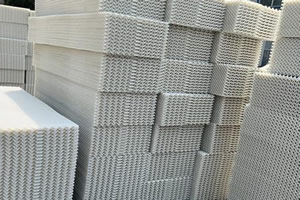
Polypropylene (PP) fill is recommended when operating temperatures exceed the limits of standard PVC fill or when better chemical resistance is required.
Suitable Conditions
- High-temperature circulating water
- Chemical plants
- Corrosive environments
- Special industrial processes
Common Selection Mistakes
- Selecting fill based only on price
- Ignoring water chemistry reports
- Using high-efficiency film fill for dirty water
- Choosing PVC where PP is required
- Ignoring future maintenance costs
Maintenance Recommendations
Regardless of the fill type, regular water treatment and scheduled inspections are essential. Monitoring scaling, biological growth, and water chemistry helps maintain cooling efficiency and extends the service life of the fill.
Frequently Asked Questions
Can PVC film fill be used with dirty water?
It can, but only if the water is properly filtered and chemically treated. Otherwise, clogging may reduce cooling performance.
Which fill is best for wastewater cooling towers?
Splash fill is generally preferred because of its superior resistance to fouling and blockage.
Does better water treatment increase fill lifespan?
Yes. Effective water treatment reduces scaling, corrosion, and biological growth, helping cooling tower fill maintain its original thermal performance for a longer period.
Conclusion
Selecting cooling tower fill according to water quality is essential for achieving reliable cooling performance and minimizing maintenance costs. Understanding water chemistry, contamination levels, and operating conditions allows engineers to choose the most suitable fill design and material for long-term efficiency.
TowerFill manufactures PVC film fill, PP fill, splash fill, drift eliminators, and customized cooling tower fill solutions for industrial cooling systems worldwide. Contact our technical team for professional product recommendations based on your water quality and operating conditions.