

Why Does Cooling Tower Fill Lose Efficiency? 7 Hidden Causes Most Engineers Overlook
Cooling towers are designed to provide reliable heat rejection under a wide range of operating conditions. However, many operators eventually notice that their cooling tower no longer delivers the same performance it did when it was first commissioned. Cold water temperature gradually rises, energy consumption increases, and production equipment begins operating closer to its thermal limits.
In many cases, the first conclusion is that the cooling tower fill has failed and needs to be replaced. While aging fill media can certainly contribute to reduced cooling performance, it is rarely the only reason. Replacing the fill without identifying the actual root cause often leads to unnecessary maintenance costs while leaving the original problem unresolved.
This guide explains the engineering principles behind cooling tower fill performance, identifies the most common reasons for efficiency loss, and provides practical inspection methods used by experienced maintenance teams. Whether you operate HVAC cooling towers, industrial process cooling systems, chemical plants, power stations, or manufacturing facilities, understanding these factors will help improve long-term cooling efficiency and reduce operating costs.
What Is Cooling Tower Fill and Why Is It So Important?
Cooling tower fill is the heart of the heat transfer process. Its purpose is to maximize the contact area between circulating water and ambient air while extending the time that water remains inside the tower.
As warm water flows across the fill surface, it spreads into a thin film or cascades through splash elements, dramatically increasing the available heat transfer area. Air passing through the fill absorbs heat through evaporation, allowing cooled water to return to the process.
Without properly functioning fill media, the cooling tower loses a significant portion of its thermal efficiency regardless of fan size or water flow rate.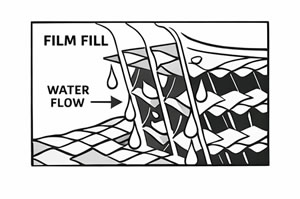
How Cooling Tower Efficiency Gradually Declines
Unlike pumps or motors, cooling tower fill rarely fails suddenly. Performance usually declines gradually over several months or even years.
Typical symptoms include:
- Higher cold water temperatures.
- Reduced approach temperature performance.
- Longer equipment cooling cycles.
- Higher fan energy consumption.
- More frequent maintenance shutdowns.
- Increasing pressure drop across the fill pack.
Because these changes occur slowly, many facilities continue operating until cooling capacity becomes insufficient for production demands.
Hidden Cause #1 – Uneven Water Distribution
One of the most overlooked causes of poor cooling performance is uneven water distribution.
Even premium cooling tower fill cannot perform efficiently if water fails to cover the entire fill surface evenly.
Common reasons include blocked spray nozzles, damaged distribution basins, incorrect nozzle pressure, or poor maintenance practices. When some sections of the fill remain dry while others receive excessive flow, heat transfer efficiency decreases immediately.
Many towers showing apparent "fill failure" actually recover much of their original performance after restoring proper water distribution without replacing the existing fill media.
Hidden Cause #2 – Mineral Scale Restricts Water Flow
Cooling systems using hard make-up water are especially vulnerable to mineral scaling.
Calcium carbonate, silica and other dissolved minerals gradually accumulate on the fill surface. As deposits become thicker, the narrow flow passages inside film fill become partially blocked, reducing both airflow and water distribution.
| Scaling Level | Cooling Performance | Recommended Action |
|---|---|---|
| Light | Minimal impact | Monitor water chemistry |
| Moderate | Noticeable efficiency loss | Professional cleaning |
| Heavy | Major airflow restriction | Evaluate cleaning or replacement |
Hidden Cause #3 – Biological Growth Inside the Fill Pack
Warm circulating water creates ideal conditions for algae, bacteria and biofilm.
As biological growth develops, slime begins covering the fill surface and blocking airflow passages. Even relatively thin layers can significantly reduce evaporation efficiency.
Typical warning signs include:
- Green algae deposits.
- Brown slime.
- Unpleasant odor.
- Uneven water flow.
- Higher approach temperatures during summer.
Maintaining an effective water treatment program remains the best long-term solution for minimizing biological fouling.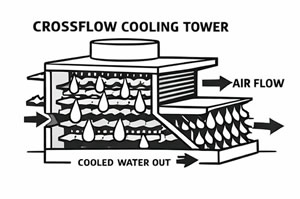
Hidden Cause #4 – Airflow Restriction
Cooling towers depend equally on water movement and airflow. Even perfectly clean fill cannot perform efficiently if sufficient air cannot pass through the tower.
Typical airflow restrictions include dirty drift eliminators, damaged fans, blocked air inlets, collapsed fill sections and surrounding obstructions that reduce natural airflow into the tower.
Many maintenance teams focus entirely on the fill while overlooking airflow problems that may actually be responsible for declining cooling performance.
Hidden Cause #5 – Fill Material Aging
Modern PVC and PP fill materials are designed for long service life, but no material lasts forever.
Years of thermal cycling, ultraviolet exposure, chemical treatment and continuous operation gradually reduce structural strength.
Signs of aging include:
- Brittle sheets.
- Warping.
- Collapsed fill blocks.
- Broken support points.
- Visible deformation.
Once structural integrity has been lost, cleaning alone cannot restore original performance.
Hidden Cause #6 – Incorrect Fill Selection
Selecting the wrong fill design for operating conditions often leads to repeated maintenance problems.
High-efficiency film fill performs extremely well with clean circulating water, but applications containing suspended solids may require different fill geometries to reduce clogging risk.
When selecting replacement fill, engineers should evaluate:
- Water quality.
- Operating temperature.
- Tower configuration.
- Maintenance frequency.
- Expected service life.
- Required cooling performance.
Hidden Cause #7 – Installation Errors
Improper installation frequently prevents new fill from achieving its designed performance.
Common installation mistakes include incorrect sheet orientation, uneven support structures, excessive compression between fill packs and damage during installation.
Even small installation errors can disturb airflow and water distribution across the entire cooling tower.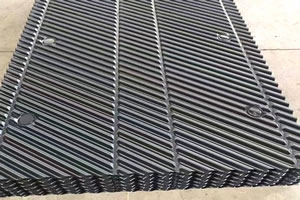
Engineering Inspection Checklist
| Inspection Item | Status |
|---|---|
| Water evenly distributed | ☐ |
| Spray nozzles clean | ☐ |
| No significant mineral scale | ☐ |
| No biological fouling | ☐ |
| Airflow unobstructed | ☐ |
| Fan operating correctly | ☐ |
| Fill structure intact | ☐ |
| Support structure stable | ☐ |
| Water treatment records reviewed | ☐ |
| No abnormal vibration | ☐ |
Clean or Replace? Making the Right Decision
Not every cooling tower requires immediate fill replacement. In many situations, professional cleaning combined with improved water treatment can restore much of the original cooling performance.
Replacement becomes appropriate when structural damage, severe brittleness or permanent deformation prevents the fill from maintaining its designed geometry.
A systematic inspection always provides better long-term results than replacing components based only on appearance.
Frequently Asked Questions
How long does cooling tower fill normally last?
Service life depends on water quality, operating temperature, maintenance practices and material selection. Properly maintained fill can remain effective for many years.
Can cooling tower fill be cleaned?
Yes. Light fouling and mineral deposits can often be removed using appropriate cleaning methods. However, structural damage cannot be repaired through cleaning alone.
Does replacing fill always improve cooling performance?
No. Airflow restrictions, poor water distribution, inadequate water treatment and fan problems should always be investigated before replacing fill media.
Which material is better, PVC or PP?
PVC is widely used for general cooling tower applications because of its excellent thermal performance and cost efficiency. PP is generally selected where higher operating temperatures or more demanding chemical conditions exist.
How often should cooling tower fill be inspected?
Visual inspections should be included during every scheduled shutdown, while detailed performance evaluations are recommended whenever cooling efficiency begins to decline.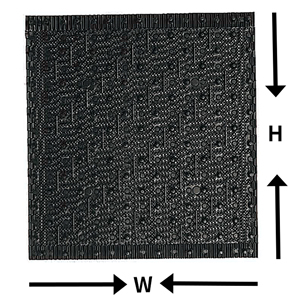
Conclusion
Loss of cooling efficiency is rarely caused by a single issue. Water distribution, airflow, scaling, biological fouling, aging materials and operating conditions all influence the performance of cooling tower fill.
Understanding these factors allows maintenance teams to make informed decisions, reduce unnecessary replacement costs and extend the operating life of the entire cooling tower system.
Contact Our Engineering Team
If you would like to learn more about Cooling Tower Fill, need help selecting replacement fill media, or are experiencing cooling performance problems, our engineering team is ready to assist.
You are welcome to send us your cooling tower drawings, technical specifications, photos, or even samples of your existing fill media. Based on your operating conditions, we can help evaluate suitable replacement options and recommend practical solutions for your project.
Contact us today for technical support, engineering consultation, or product recommendations.
How Heat Transfer Actually Happens Inside Cooling Tower Fill
To understand why cooling tower fill loses efficiency, it is important to understand how the cooling process works. Many people assume that the fill simply slows down the water flow. In reality, its primary function is to maximize the contact area between water and air while increasing the residence time of the water inside the tower.
When warm circulating water enters the fill pack, it spreads into thousands of thin water films. At the same time, ambient air passes through the fill structure. A small portion of the water evaporates, removing a large amount of heat from the remaining water. This process is known as evaporative cooling and is the primary reason cooling towers are so efficient.
Any factor that interrupts this contact between water and air will reduce cooling performance. Even a small decrease in effective heat transfer area can significantly increase the outlet water temperature.
The Relationship Between Fill Design and Cooling Performance
Not all fill media are designed for the same operating conditions. Different geometries provide different balances between cooling efficiency, airflow resistance, fouling resistance, and service life.
| Fill Type | Main Advantage | Typical Application |
|---|---|---|
| Film Fill | Maximum heat transfer efficiency | Clean water systems |
| Splash Fill | Better resistance to fouling | Dirty industrial water |
| PVC Fill | Excellent cost-performance ratio | General HVAC & industrial cooling |
| PP Fill | Higher temperature resistance | Chemical and high-temperature applications |
Choosing the correct fill configuration is often more important than choosing the most expensive material. A properly selected fill media will usually deliver lower maintenance costs over its entire operating life.
Real Engineering Example #1 – Scale Was Not the Root Cause
During a routine inspection at a manufacturing facility, operators reported that the cooling tower had lost nearly 15** of its cooling capacity over the previous summer. Initial assumptions pointed to heavily scaled fill media.
After inspection, engineers discovered that the fill remained in acceptable condition. The actual problem was several partially blocked spray nozzles, which caused nearly one-third of the fill surface to receive insufficient water.
After cleaning the distribution system and balancing the water flow, the cooling tower recovered most of its original thermal performance without replacing the fill media.
This example demonstrates why engineering diagnosis should always precede equipment replacement.
Real Engineering Example #2 – Poor Water Treatment Shortened Fill Life
A chemical processing facility experienced repeated cooling problems despite replacing its fill every few years.
Further investigation showed that the circulating water treatment program had not been properly maintained. High hardness levels and uncontrolled biological growth caused rapid fouling throughout the cooling tower.
After implementing a consistent water treatment program and improving monitoring procedures, the replacement interval increased significantly while maintenance costs decreased.
Real Engineering Example #3 – Wrong Fill Selection Increased Maintenance Costs
An industrial customer selected a high-efficiency film fill for a cooling tower operating with heavily contaminated process water.
Although the initial cooling performance was excellent, suspended solids quickly accumulated inside the narrow flow channels. Frequent cleaning became necessary, resulting in repeated shutdowns and higher maintenance expenses.
After changing to a fill configuration better suited to the water quality, operating stability improved substantially even though the theoretical heat transfer efficiency was slightly lower.
The highest theoretical efficiency does not always produce the best long-term operating result. The correct solution is the one that matches the actual operating environment.
Common Mistakes That Reduce Cooling Tower Efficiency
- Replacing fill before identifying the root cause.
- Ignoring water chemistry records.
- Cleaning only visible deposits while leaving internal blockage untouched.
- Operating with damaged spray nozzles.
- Allowing biological fouling to develop during warm seasons.
- Ignoring gradual increases in approach temperature.
- Installing replacement fill without inspecting support structures.
- Using the same fill type for completely different water conditions.
Many of these issues develop slowly over time, making periodic engineering inspections essential for maintaining long-term cooling efficiency.
How Different Operating Environments Affect Cooling Tower Fill Performance
Cooling tower fill does not operate under identical conditions in every industry. A fill pack that performs exceptionally well in a commercial HVAC system may experience rapid fouling in a steel plant or chemical facility. Understanding the operating environment is therefore one of the most important steps when evaluating cooling performance.
Instead of asking, "Which cooling tower fill is the best?", engineers should ask, "Which cooling tower fill is best for this application?"
| Industry | Typical Water Quality | Main Challenge | Inspection Priority |
|---|---|---|---|
| Commercial HVAC | Clean | Mineral scaling | Water chemistry |
| Data Center | Very Clean | Thermal stability | Approach temperature |
| Steel Plant | Poor | Suspended solids | Blockage inspection |
| Chemical Plant | Variable | Chemical compatibility | Material selection |
| Mining | Very Poor | Sediment accumulation | Cleaning frequency |
| Power Plant | Controlled | Long-term reliability | Routine inspection |
Selecting fill media without considering the actual operating environment often leads to unnecessary maintenance costs and shorter service life.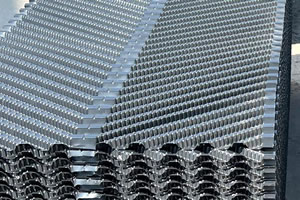
How to Diagnose Cooling Tower Fill Problems Before Replacement
Replacing fill should never be the first maintenance decision. A structured inspection process allows operators to identify the true cause of reduced cooling performance before investing in new materials.
Step 1 – Compare Current Performance with Design Conditions
Review historical operating records and compare today's cold-water temperature, approach temperature and fan power consumption with the original design values. A gradual decline usually indicates developing fouling or airflow issues rather than sudden material failure.
Step 2 – Inspect Water Distribution
Observe the water distribution while the cooling tower is operating. Dry areas, excessive water concentration or blocked nozzles should be corrected before evaluating the fill itself.
Step 3 – Examine the Fill Structure
Look for broken sheets, collapsed sections, excessive deformation, brittle material or heavy deposits that cannot be removed through normal cleaning procedures.
Step 4 – Evaluate Airflow
Inspect fans, drift eliminators, air inlet louvers and surrounding obstructions. Airflow restrictions often produce symptoms similar to blocked fill.
Step 5 – Review Water Treatment Records
Repeated scaling or biological fouling usually indicates an underlying water treatment issue. Installing new fill without correcting the water chemistry often results in the same problems returning within a short period.
Cleaning vs. Replacement: Which Option Makes More Sense?
One of the most frequently asked questions is whether cooling tower fill should be cleaned or replaced. The correct answer depends on the physical condition of the fill rather than its age alone.
| Observed Condition | Recommended Action | Reason |
|---|---|---|
| Light dust or debris | Routine cleaning | No structural damage |
| Moderate mineral deposits | Professional cleaning | Heat transfer can often be restored |
| Biological fouling | Cleaning + improve water treatment | Prevent rapid recurrence |
| Broken or collapsed fill | Replacement | Mechanical integrity has been lost |
| Severe brittleness | Replacement | Material has reached the end of its service life |
A professional inspection often reveals that only part of the fill pack requires replacement, reducing both material costs and downtime.
Five Practical Ways to Extend the Service Life of Cooling Tower Fill
- Maintain stable water chemistry.
Consistent control of hardness, pH and biological activity significantly reduces scaling and fouling. - Inspect spray nozzles regularly.
Uniform water distribution is essential for efficient heat transfer. - Remove debris before it reaches the fill.
Keeping strainers and filtration systems clean prevents unnecessary blockage. - Monitor cooling performance trends.
Small changes in approach temperature often reveal developing problems before they become serious. - Schedule annual engineering inspections.
A detailed inspection helps identify aging components before unexpected failures occur.
Facilities that combine regular inspections with effective water treatment generally achieve a much longer service life from their cooling tower fill than facilities relying solely on reactive maintenance.
How to Build a Preventive Maintenance Plan for Cooling Tower Fill
One of the biggest differences between high-performing cooling systems and those that require frequent repairs is not the equipment itself—it is the maintenance strategy. Facilities that rely only on corrective maintenance often discover problems after cooling performance has already declined. In contrast, preventive maintenance allows engineers to identify small issues before they become expensive failures.
An effective maintenance plan should combine visual inspections, operating data analysis, water treatment records, and scheduled cleaning procedures. Rather than focusing on a single component, the entire cooling system should be evaluated as an integrated process.
Recommended Inspection Schedule
| Inspection Item | Frequency | Purpose |
|---|---|---|
| Visual inspection of fill surface | Monthly | Identify scaling and fouling early |
| Spray nozzle inspection | Every 3 months | Ensure even water distribution |
| Water quality analysis | Weekly | Control hardness and biological growth |
| Fan and motor inspection | Quarterly | Maintain proper airflow |
| Comprehensive shutdown inspection | Annually | Evaluate overall cooling performance |
This schedule can be adjusted depending on operating conditions, environmental contamination, and production requirements. Towers operating in mining, steel, or chemical industries may require more frequent inspections than commercial HVAC systems.
Performance Indicators Every Operator Should Monitor
Instead of waiting until cooling performance becomes unacceptable, operators should continuously monitor key performance indicators (KPIs). These values provide early warning signs long before visible damage appears.
- Cold water outlet temperature
- Approach temperature
- Range temperature
- Fan motor current
- Circulating water flow rate
- Pressure drop across the fill
- Water conductivity
- Cycles of concentration
- Chemical consumption
Trending these values over time is often more valuable than looking at individual measurements. A slow change over several months frequently indicates developing problems that are still inexpensive to correct.
When Should Cooling Tower Fill Be Replaced?
Although cleaning can restore performance in many situations, there comes a point when replacement is the more practical solution. The decision should be based on engineering evaluation rather than appearance alone.
Replacement is generally recommended when one or more of the following conditions exist:
- The fill has become brittle and breaks easily during inspection.
- Large sections of the fill have collapsed or deformed.
- Cleaning no longer restores acceptable cooling performance.
- Repeated repairs are becoming more expensive than replacement.
- The existing fill is no longer suitable for current operating conditions.
Replacing fill at the correct time helps restore thermal performance while avoiding repeated maintenance shutdowns.
Common Misconceptions About Cooling Tower Fill
Myth 1: Older Fill Always Needs Replacement
Age alone is not an accurate indicator of performance. Well-maintained fill operating under good water quality can continue performing efficiently for many years.
Myth 2: More Fill Means Better Cooling
Adding additional fill does not automatically improve cooling capacity. Airflow resistance, tower design, and water distribution must remain balanced.
Myth 3: Cleaning Solves Every Problem
Cleaning removes deposits, but it cannot repair cracked sheets, collapsed fill blocks, or degraded materials. Structural damage requires replacement.
Myth 4: The Highest Efficiency Fill Is Always the Best Choice
High-efficiency film fill delivers outstanding performance in clean water systems, but applications with high suspended solids may perform better using a design that is more resistant to fouling.
Why Proper Fill Selection Reduces Lifecycle Cost
Many purchasing decisions focus only on the initial price of cooling tower fill. However, experienced engineers evaluate lifecycle cost instead of purchase cost alone.
Lifecycle cost includes:
- Initial purchase price
- Installation cost
- Cleaning frequency
- Water treatment expenses
- Energy consumption
- Maintenance labor
- Expected service life
- Replacement interval
Selecting the correct fill media for the operating environment often reduces total ownership cost far more than choosing the lowest-priced option.
Related Maintenance Components Worth Inspecting
While evaluating cooling tower fill, engineers should also inspect other components that directly influence thermal performance. Problems in these areas may produce symptoms that resemble fill failure.
- Drift eliminators
- Air inlet louvers
- Spray nozzles
- Hot water distribution basin
- Support beams and structural framework
- Fan blades and gearbox
- Cold water basin cleanliness
- Water filtration equipment
A complete system inspection provides a far more accurate diagnosis than examining the fill media alone.
Frequently Asked Questions (FAQ)
What is the most common reason cooling tower fill loses efficiency?
The most common causes include mineral scaling, biological fouling, suspended solids, uneven water distribution, and restricted airflow. In many cases, several of these factors occur simultaneously rather than individually.
How often should cooling tower fill be inspected?
A visual inspection should be performed at least once every month, while a comprehensive engineering inspection is recommended during annual shutdowns. Facilities operating with poor water quality may require more frequent inspections.
Can cooling tower fill be cleaned instead of replaced?
Yes. If the fill structure remains mechanically sound, professional cleaning can often restore a significant portion of its original thermal performance. However, cracked, brittle, or collapsed fill should normally be replaced.
Does water quality affect the lifespan of cooling tower fill?
Absolutely. Water chemistry is one of the most important factors affecting fill longevity. Proper hardness control, biological treatment, filtration, and blowdown management can extend service life considerably.
Which fill material is better, PVC or PP?
PVC cooling tower fill is widely used because it provides excellent heat transfer performance and cost efficiency for most HVAC and industrial cooling applications. PP cooling tower fill is generally preferred where operating temperatures are higher or where greater chemical resistance is required.
Can replacing cooling tower fill reduce energy consumption?
If the existing fill has become severely fouled or structurally damaged, replacing it can improve heat transfer efficiency. Lower cold-water temperatures often reduce the operating load on chillers, compressors, and other downstream equipment, helping decrease overall energy consumption.
Quick Inspection Checklist Before Ordering New Fill
Before deciding to purchase replacement fill, engineers should complete the following inspection checklist:
- ✓ Compare current cooling performance with historical operating data.
- ✓ Check whether spray nozzles provide uniform water distribution.
- ✓ Inspect for biological slime, algae, or bacterial growth.
- ✓ Measure mineral scaling inside the fill passages.
- ✓ Inspect airflow through the entire tower.
- ✓ Verify fan speed and motor operating condition.
- ✓ Review recent water treatment reports.
- ✓ Check fill supports for deformation or corrosion.
- ✓ Determine whether cleaning is technically feasible.
- ✓ Replace fill only after confirming that structural deterioration has occurred.
Following this process helps avoid unnecessary replacement projects while ensuring that genuine performance issues are corrected efficiently.
Key Takeaways
Cooling tower fill is responsible for maximizing the contact between water and air, making it one of the most important components in the entire cooling system. However, declining performance is rarely caused by the fill alone.
Successful maintenance requires engineers to evaluate the complete cooling process, including water quality, spray distribution, airflow, operating conditions, structural integrity, and maintenance history. Facilities that adopt a preventive maintenance strategy generally experience lower operating costs, longer equipment life, and more stable cooling performance.
Rather than asking, "Should we replace the fill?", a better engineering question is "What is preventing the fill from performing as designed?" Identifying that answer first almost always leads to better technical and economic decisions.
Need Help Selecting the Right Cooling Tower Fill?
Whether you are upgrading an existing cooling tower, replacing aging fill media, or selecting materials for a new project, choosing the correct solution starts with understanding your operating conditions rather than simply selecting a product by specification.
Our engineering team can evaluate your cooling tower based on water quality, operating temperature, tower configuration, and performance requirements to recommend an appropriate solution.
If available, you can send:
- Cooling tower drawings
- Existing fill dimensions
- Site photos
- Operating temperature data
- Water quality reports
- Project specifications
This information allows us to provide more accurate technical recommendations for replacement or new installations.
Contact our engineering team to discuss your cooling tower project or request technical assistance.
Related Articles
- How to Clean Cooling Tower Fill Without Damaging the Material
- PVC vs PP Cooling Tower Fill: Which Material Is Better?
- Cooling Tower Fill Replacement: When Should You Replace Instead of Clean?
- How Water Quality Affects Cooling Tower Performance
- Common Cooling Tower Maintenance Mistakes That Reduce Efficiency
Recommended URL Slug
/why-does-cooling-tower-fill-lose-efficiency
SEO Title
Why Does Cooling Tower Fill Lose Efficiency? 7 Hidden Causes Explained
Meta Description
Discover the seven most common reasons cooling tower fill loses efficiency. Learn how scaling, fouling, airflow, water quality, and maintenance practices affect cooling performance and how to extend fill service life.
Primary Keyword
cooling tower fill
Secondary Keywords
- cooling tower fill media
- cooling tower packing
- PVC cooling tower fill
- PP cooling tower fill
- cooling tower maintenance
- cooling tower efficiency
- cooling tower fill replacement
- cooling tower fill cleaning
Suggested Images
- Cooling tower fill structure comparison
- Mineral scaling on fill media
- Biological fouling inside cooling tower fill
- Engineering inspection of fill pack
- Water distribution over film fill
- Comparison of clean vs blocked fill channels
Estimated Length: Approximately 4,800–5,500 words after HTML rendering.