

PVC vs PP Cooling Tower Fill: Which Material Is Best for Your Cooling System?
Selecting the right Cooling Tower Fill is one of the most important decisions when designing a new cooling tower or replacing aging fill media. While fill geometry affects heat transfer performance, the material itself plays a critical role in determining durability, operating temperature, chemical resistance, maintenance requirements, and overall service life.
Today, the two most widely used materials are PVC Cooling Tower Fill Media and PP Cooling Tower Fill. Although both are widely used throughout industrial and commercial cooling systems, they are designed for different operating environments and offer distinct advantages.
Understanding the differences between PVC and PP allows engineers, contractors, and facility managers to make informed purchasing decisions that improve cooling efficiency while minimizing long-term maintenance costs.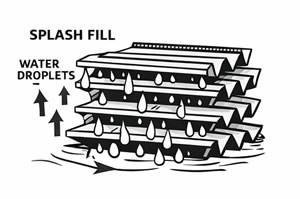
Why Cooling Tower Fill Material Matters
Cooling tower fill creates a large contact surface where warm circulating water meets incoming air. Efficient heat exchange depends on maintaining stable water films across the fill sheets while allowing unrestricted airflow through the tower.
If the fill material cannot tolerate operating temperatures or chemical exposure, it may deform, crack, or lose structural strength. Damaged fill reduces cooling capacity, increases fan energy consumption, and often requires premature replacement.
Choosing the appropriate material therefore affects not only the lifespan of the fill itself but also the reliability of the entire cooling system.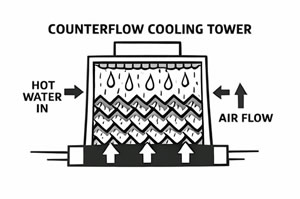
What Is PVC Cooling Tower Fill Media?
PVC Cooling Tower Fill Media is the most common solution for commercial HVAC systems and many industrial cooling towers. PVC offers an excellent balance between cooling efficiency, durability, lightweight construction, and cost effectiveness.
Its corrugated sheet structure produces a thin water film that maximizes heat transfer while maintaining relatively low airflow resistance. Because PVC is economical and easy to fabricate, it has become the preferred choice for thousands of cooling tower installations worldwide.
Main Advantages of PVC Fill
- Excellent heat transfer efficiency
- Lightweight construction simplifies installation
- Competitive purchase cost
- Good corrosion resistance
- Long service life under normal operating temperatures
- Suitable for most commercial cooling applications
PVC performs best in cooling towers operating within conventional temperature ranges and with properly treated circulating water.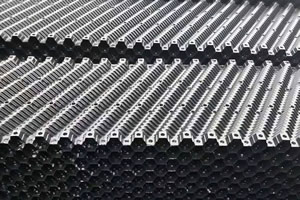
What Is PP Cooling Tower Fill?
PP Cooling Tower Fill is manufactured from polypropylene, a material well known for its higher temperature resistance and excellent chemical stability. Compared with PVC, PP is better suited for demanding industrial environments where cooling water temperatures may exceed the normal operating limits of PVC.
Industries such as power generation, metallurgy, mining, petrochemical processing, and chemical manufacturing frequently select PP fill because of its ability to maintain structural integrity under challenging operating conditions.
Main Advantages of PP Fill
- Higher continuous operating temperature
- Excellent resistance to aggressive chemicals
- Good mechanical strength
- Suitable for harsh industrial environments
- Long service life under elevated temperatures
Although PP generally costs more than PVC, its superior durability often results in lower lifecycle costs for high-temperature cooling systems.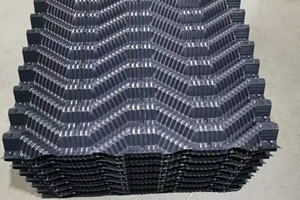
PVC vs PP: Performance Comparison
Both materials provide excellent cooling performance when applied in the correct operating environment. The following comparison highlights their key differences.
| Feature | PVC Fill | PP Fill |
|---|---|---|
| Cooling Efficiency | Excellent | Excellent |
| Temperature Resistance | Medium | High |
| Chemical Resistance | Good | Excellent |
| Weight | Light | Slightly Heavier |
| Installation | Easy | Easy |
| Typical Cost | Lower | Higher |
| Typical Applications | Commercial HVAC | Industrial Process Cooling |
The decision should never be based solely on purchase price. Instead, engineers should evaluate operating temperature, water chemistry, maintenance requirements, and expected service life before selecting the appropriate fill material.
Temperature Resistance: One of the Biggest Differences
Temperature is often the deciding factor when selecting cooling tower fill material. Standard PVC performs very well in conventional cooling systems but may soften or deform if exposed to continuously elevated water temperatures beyond its recommended operating range.
In contrast, PP Cooling Tower Fill maintains its structural stability under significantly higher temperatures, making it ideal for industrial facilities with demanding thermal conditions.
For facilities experiencing seasonal temperature fluctuations, reviewing historical operating data before selecting replacement fill can help prevent premature failure and reduce maintenance costs.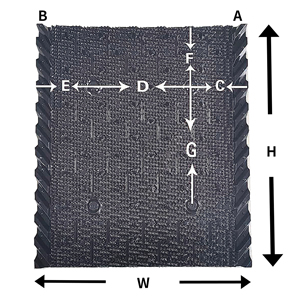
Chemical Resistance and Water Quality Considerations
Besides temperature, water chemistry is another critical factor when selecting cooling tower fill. Cooling systems that circulate water containing high concentrations of dissolved minerals, aggressive chemicals, or industrial contaminants place greater demands on fill materials.
PVC Cooling Tower Fill Media performs exceptionally well in most HVAC and industrial cooling systems where water treatment is properly maintained. It offers excellent resistance to corrosion and provides long service life under normal operating conditions.
However, facilities that handle acidic or alkaline process water, chemical manufacturing, or high-temperature circulation often benefit from PP Cooling Tower Fill, which provides greater resistance to chemical attack and thermal stress.
Maintenance Requirements for PVC and PP Fill
Regardless of material selection, routine maintenance is essential for maintaining cooling efficiency. Dirt, biological growth, and mineral scale gradually reduce airflow and water distribution across the fill surface, lowering heat transfer performance.
Operators should establish a preventive maintenance schedule that includes:
- Regular inspection of fill condition
- Cleaning accumulated scale and biological growth
- Checking water distribution nozzles
- Monitoring water treatment performance
- Inspecting Drift Eliminators for damage or excessive fouling
- Cleaning Cooling Tower Air Inlet Louvers to maintain unrestricted airflow
Proper maintenance often has a greater impact on cooling performance than the choice between PVC and PP alone. Even premium fill materials can lose efficiency if maintenance is neglected.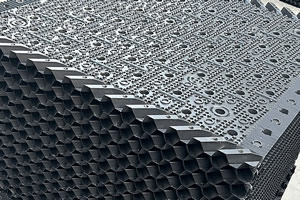
Which Material Is Right for Your Cooling Tower?
There is no universal answer because every cooling tower operates under different conditions. The best solution depends on the combination of operating temperature, water quality, cooling capacity, maintenance strategy, and budget.
PVC Cooling Tower Fill Media is generally recommended for:
- Commercial HVAC systems
- Office buildings
- Hotels and hospitals
- Data centers
- Standard industrial cooling applications
PP Cooling Tower Fill is generally recommended for:
- Power plants
- Chemical processing facilities
- Steel mills
- Mining operations
- High-temperature industrial cooling systems
If your cooling tower uses a film fill configuration, selecting the correct geometry is equally important. Depending on the tower design, you may also require either Counterflow Film Fill or Crossflow Film Fill to achieve optimal cooling performance.
Frequently Asked Questions
Is PP always better than PVC?
No. PP offers higher temperature and chemical resistance, but PVC is more economical and performs exceptionally well in most standard cooling tower applications.
Can PVC fill be used in industrial cooling towers?
Yes. Many industrial cooling towers successfully use PVC fill when operating temperatures remain within the material's recommended range and proper water treatment is maintained.
Does PP provide higher cooling efficiency?
Cooling efficiency depends primarily on fill design, airflow, and water distribution rather than the material itself. Both PVC and PP can achieve excellent thermal performance when correctly applied.
How long does cooling tower fill typically last?
Service life varies depending on operating conditions, maintenance, and water quality. With proper care, both PVC and PP fill can provide many years of reliable operation.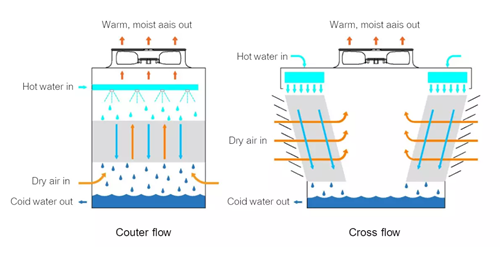
Conclusion
Both PVC Cooling Tower Fill Media and PP Cooling Tower Fill are proven solutions for modern cooling towers. PVC offers outstanding value and cooling efficiency for conventional applications, while PP provides superior durability in high-temperature and chemically demanding environments.
Evaluating operating temperature, water quality, maintenance practices, and cooling tower design before selecting replacement fill helps maximize equipment performance and reduce long-term operating costs.
Need Help Selecting the Right Cooling Tower Fill?
Our engineering team can recommend the most suitable fill material and configuration based on your cooling tower design, operating temperature, and water quality requirements.
- PVC Cooling Tower Fill Media
- PP Cooling Tower Fill
- Counterflow Film Fill
- Crossflow Film Fill
- Splash Grid Fill
For technical support, product recommendations, or a quotation, please contact our engineering team.